
A roof does not wait. When a lake-effect storm rolls in off Lake Ontario at 3 a.m. and water is running down the inside of your wall, the window to prevent serious interior damage is measured in hours, not days. Every hour of exposure to rain, ice, or wind-driven debris expands the damage from a repair to a replacement.
Call YS Roofing now: 647-667-1367
YS Roofing is a GAF Certified Residential Roofing Contractor with 15-plus years of GTA roofing experience. We serve Pickering, Durham Region, and the surrounding GTA for emergency roof repair, storm damage, and active leak response. Free estimates. Financing available through Financeit.
If your roof is failing right now, call first. The rest of this article will be here when you are off the phone.
When to Call Immediately
Call YS Roofing the same day if any of the following applies:
- Water is actively entering through the ceiling or walls
- You can see daylight through a section of the roof deck
- Shingles, flashing, or fascia have separated and are exposed to open sky
- A tree branch or debris has punctured or compressed the roof surface
- Ice has built up at the eaves and water is backing under shingles
- You heard a sharp impact during a hail event and suspect penetration damage
- Wind has lifted or displaced ridge cap shingles across more than one row
- The ceiling is sagging or deforming, indicating accumulated water load
These are same-day situations. Waiting 24–72 hours for a standard inspection visit turns each of these into a larger repair bill and, in some cases, a structural problem.
First Steps After Storm Damage to Your Pickering Roof
Act in this order. The sequence matters.
Step 1. Get everyone out of rooms directly below visible damage. If the ceiling is bulging, water has pooled above the drywall. That drywall can drop without warning, and the water behind it accelerates mould growth immediately on contact with insulation.
Step 2. Cut power to affected areas if water is near fixtures or panels. Water and electrical systems in the same ceiling cavity are a serious hazard. If you are unsure which breakers cover the affected rooms, shut the main.
Step 3. Document everything before touching it. Take wide shots and close-up shots of every visible entry point, every wet ceiling area, and every damaged section of the roof you can safely photograph from ground level or a second-floor window. Do not go onto the roof. Record a video walk-through of all affected interior spaces. This documentation supports your insurance claim and locks in the pre-repair condition.
Step 4. Place buckets and use plastic sheeting, not towels, to redirect active leaks. Towels absorb and hold moisture against wood framing. Plastic sheeting directed into a bucket keeps water moving out of the structure.
Step 5. Call YS Roofing at 647-667-1367. We will ask you a set of questions to assess urgency, dispatch accordingly, and guide you on any immediate steps specific to your roof type before the crew arrives.
Step 6. Call your insurance company. Report the event while it is fresh. Most Ontario home insurance policies require prompt notification of emergency damage. Do not delay this step.
How to Protect Your Home Interior While Waiting for Help
The time between the storm and the repair crew is where the majority of interior damage occurs. Most homeowners focus on the roof when they should be managing the interior first.
Puncture the ceiling bubble before it bursts. If you see a circular stain with a visible sag, place a bucket directly underneath, then use a screwdriver to make a controlled puncture at the lowest point of the sag. This releases the pooled water in a controlled stream rather than a sudden ceiling collapse. It is a counterintuitive move, and it is the right one.
Move contents and cover flooring in the affected zone. Water tracks along joists and drops at points that are not directly above the roof entry. A leak at chimney flashing on the south side of your roof can appear as a drip 2 metres away from where you expect it. Protect a wider radius than you think is necessary.
If you have accessible attic space and it is safe to enter, place a tarp over the insulation in the affected zone. This slows water absorption and reduces drying time after repair. Wet batt insulation loses its R-value and requires replacement if it stays wet for more than 48 hours, adding cost to a repair that started as a shingle problem.
Do not use fans to dry a wet ceiling before the source is sealed. Air movement through wet insulation does not dry it. It pushes mould spores into adjacent spaces.
What Qualifies as a Roofing Emergency?
Not every storm-related call is a true emergency. Knowing the difference helps you calibrate the response.
True emergencies are situations where the building envelope has been breached and water is actively entering the structure, or where structural integrity is at immediate risk. These require a same-day response.
Urgent but non-emergency situations include missing shingles with no current rain forecast, granule loss without penetration, and minor flashing separation with no active leak. These require inspection within 48–72 hours before conditions worsen or rain returns.
Monitoring situations include surface staining, minor granule accumulation in gutters after hail, and small lifted shingles that have re-seated. These require a scheduled inspection within two weeks.
The problem is that homeowners rarely have enough information to make this classification accurately from ground level. When in doubt, call 647-667-1367 and describe what you see. We can assess urgency over the phone in most cases and dispatch accordingly. Our residential roofing services cover the full range from emergency stabilization through to full replacement assessment.
Repair or Replace Now
- Active leak inside the home
- Roof over 20 years with visible granule loss
- Ice dam that caused interior damage
- Flat roof with interior water ingress
- Multiple repairs in the last 3 years
- Listing the home for sale
- Decking that is soft or damaged
Can Wait – Monitor Quarterly
- Roof under 15 years with no active leak
- Single shingle lifted, no interior damage
- Eavestroughs dirty but still draining
- Flat roof under 10 years with no interior signs
- Hairline flashing gap, no water ingress
- New installation within the warranty period
- Minor granule loss on a 10-year-old shingle
Common Storm Damage YS Roofing Sees in Pickering
Pickering sits on the north shore of Lake Ontario at the western edge of Durham Region, and the roofing damage patterns there reflect that geography directly.
Lake-effect snow loading and ice dam formation. Pickering’s exposure to Lake Ontario means it catches lake-effect snow events that can deposit significant accumulation in narrow time windows. Homes in Bay Ridges and the Liverpool Road corridor, many built in the 1960s and 1970s, have attic insulation that has degraded well below current standards. Ice dams form when heat escaping through an under-insulated attic melts snow at the roof deck, which then refreezes at the cold eaves. The water trapped behind that ice ridge has nowhere to go except under the shingles, through the underlayment, and into the wall cavity. By the time the homeowner notices the interior water stain, the damage is typically two to three weeks in progress. The repair is always larger than the visible entry point suggests.
Wind-driven shingle loss. Pickering’s flat lakeshore terrain provides minimal windbreak from southerly and westerly systems off the lake. Wind events in Durham Region routinely reach 80–100 km/h in spring, and we consistently see the same failure points: ridge cap shingles nailed short of the fastener zone, starter strip nailed too high, and rake edge shingles that were never sealed. A 30-year architectural shingle can fail in a sustained 80 km/h gust if the installation was off. When wind damage is extensive across the field of the roof rather than isolated to the edges, roof replacement in Pickering is often more cost-effective than patching multiple sections.
Hail impact on asphalt shingles. The Pickering-Ajax corridor sits in a hail-prone band during summer convective storm events. Hail causes granule loss that is not always visible from ground level but shows up on close inspection as dark circular impact marks, displaced granules in gutters, and dented soft metals (flashing, vents, skylight frames). The structural consequence is accelerated UV degradation of the exposed mat. A shingle that loses 20% of its granule coverage from a single hail event loses years off its rated service life. Insurance adjusters know this, and photographs taken within 24–48 hours of the event carry significantly more weight in the claim. For broader hail damage assessments involving the full roof plane, our shingle roofing service in Pickering covers the full inspection and replacement process.
Flashing failures after freeze-thaw cycles. Durham Region’s lakeshore climate still produces 30–40 freeze-thaw cycles in a typical winter. Flashing sealed with asphalt-based products cracks and separates at those temperature transitions. We see this most often at chimney step flashing, at wall-to-roof transitions on additions and dormers, and at skylight perimeters. These are not dramatic failures. They are slow, incremental, and they produce leaks that appear in spring and are incorrectly attributed to the winter’s ice events rather than to the flashing itself.
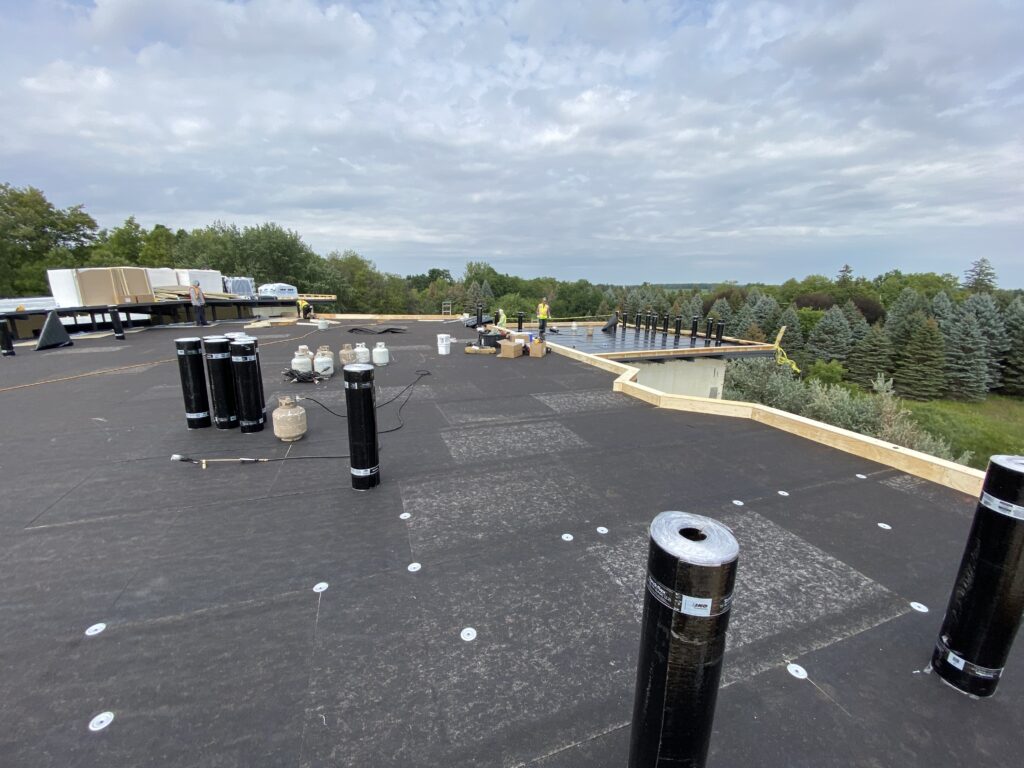
Flat roof and low-slope membrane failures. Flat roofs in Pickering face drainage challenges that pitched roofs do not. Ponding water from spring snowmelt, combined with UV degradation of TPO and modified bitumen membranes, accelerates seam separation. On commercial and mixed-use properties along Kingston Road and Brock Road, we see this regularly in the weeks after winter clears. The drainage design is what fails first, not always the membrane brand. For flat roof and low-slope membrane assessment in Pickering, our flat roofing service in Pickering covers the full scope.
What to Expect from YS Roofing's Emergency Response
When you call YS Roofing for an emergency, here is what actually happens.
We take your call and run a brief phone assessment: roof type, visible damage, current weather, interior situation. This is not a formality. The answers determine whether we dispatch with tarping materials, structural repair equipment, or both.
We arrive, assess the full scope of damage before touching anything, and photograph every relevant area. We do this for two reasons: accurate repair scope and insurance documentation. An emergency repair done without a documented pre-repair condition creates disputes with adjusters later.
We stabilize the breach. For most emergency situations in Pickering, this means temporary tarping over the damaged section secured to the deck, not draped loosely over the shingles. A tarp that lifts in the next wind event is not a repair. It is a delay. We fasten properly. Depending on the damage, we may complete permanent repairs in the same visit or schedule a follow-up once materials are confirmed.
We give you a written summary of the damage scope before we leave, including what was done, what remains to be addressed, and the documentation you need for your insurance file.
We do not pressure you to commit to a full replacement on the same visit as an emergency call. We tell you what we found, what we recommend, and what happens if you wait. The decision is yours.
Before the Adjuster Arrives: What to Do Right Now
Most standard Ontario homeowners’ policies cover sudden, accidental storm damage including wind, hail, ice, and falling trees. They do not cover damage from deferred maintenance or gradual deterioration. What you do in the first 24–48 hours determines how smoothly the claim proceeds.
Three things to do before the adjuster arrives:
- Photograph everything immediately. Exterior damage (as wide and as specific as possible), interior water entry points and staining, soft metal damage (vents, flashing, skylight frames, gutters), and your roof from ground level showing the damaged section in context. Do this before any repair work begins.
- Document the event in writing. Record the date and time the damage occurred or was first noticed, the weather conditions (Environment Canada records are useful here), and a description of what you heard or observed. Keep all contractor communications, including this emergency call.
- Confirm your policy type before filing. Ontario policies are typically replacement cost value (RCV) or actual cash value (ACV). ACV policies depreciate the roof based on age. A 15-year-old asphalt shingle roof on an ACV policy will not be valued at replacement cost. Know which you have before the claim so the settlement figure is not a surprise.
Contact your insurer before authorizing any permanent repair work. Most Ontario policies allow temporary emergency stabilization (tarping) without pre-authorization, but permanent repairs may require adjuster approval. Ask your insurer directly. Do not assume.
YS Roofing provides written documentation of the damage scope and repair work in a format that meets the standard requirements of most Ontario insurers. We can help you organize the file, but we do not negotiate claims on your behalf. That is the role of a public adjuster if the claim is disputed.
Emergency Roof Repair in Pickering: What This Covers
Emergency roof repair in Pickering covers immediate response to storm damage, active leaks, ice dams, wind-driven shingle loss, and hail impact that compromises the building envelope. The correct response sequence is: document the damage with photographs, stabilize the interior to limit water spread, call a licensed roofing contractor for same-day assessment, and notify your insurer before authorizing permanent repair work.
YS Roofing serves Pickering, Durham Region, and the surrounding GTA with same-day dispatch for active breach situations. Pickering-specific storm risks include lake-effect snow loading and ice dam formation during freeze-thaw cycles, wind events reaching 80–100 km/h off Lake Ontario in spring, and summer hail in the Pickering-Ajax corridor.
Act Now vs. Wait: A Decision Framework
Act Now
- Water is actively entering the structure
- Ceiling shows sagging or deformation
- A structural component such as the deck, rafter, or fascia is exposed
- A hail event occurred and soft metals show impact
- An ice dam is actively feeding water under shingles
- Tree or debris has made contact with the roof
Can Wait
- Damage is cosmetic with no penetration
- No rain in the forecast for 72+ hours
- Damage is limited to granule loss only
- Minor lifted shingle with no breach
- Surface staining without an active source
- Flashing shows wear but is still sealed
How YS Roofing Handles Emergency Repairs in Pickering
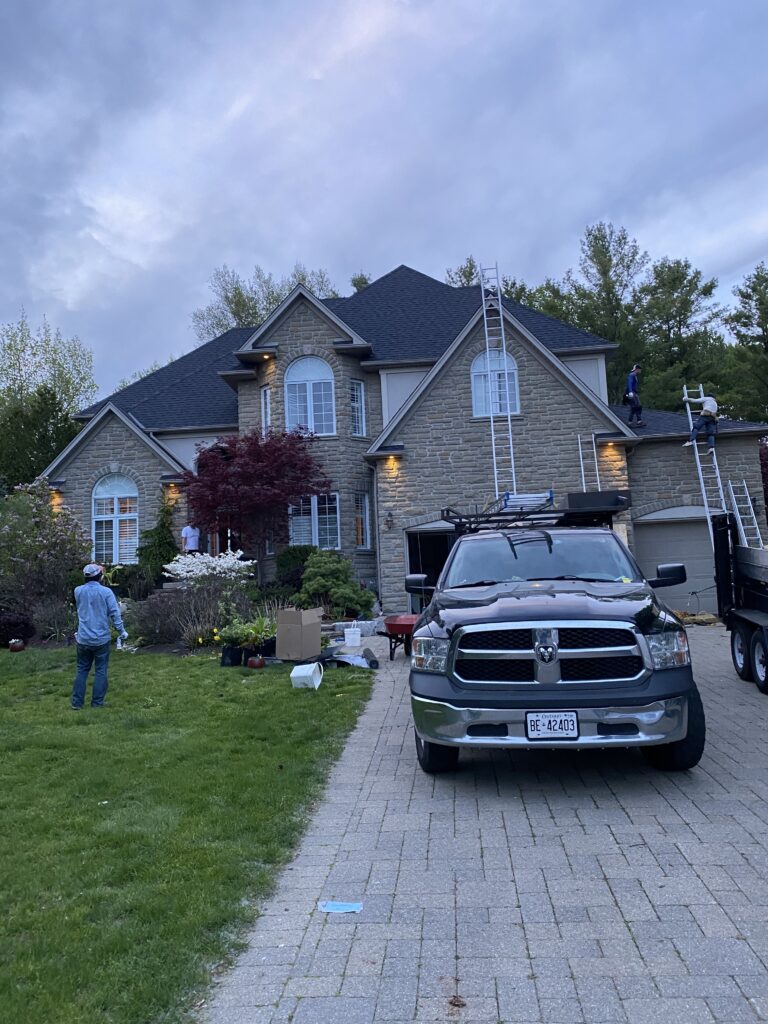
YS Roofing serves Pickering, Bay Ridges, Duffin Heights, Dunbarton, Rosebank, and surrounding Durham Region communities for emergency roof repair, storm damage response, and urgent leak resolution. The same response process extends across the region, including roof repair in Ajax and roof repair in Whitby. For non-emergency inspection and repair work, our dedicated roof repair in Pickering page covers the full scope of what that service involves.
We carry materials for the most common emergency repairs on every service vehicle: asphalt shingles in the most common profiles used in Pickering’s residential builds, ice-and-water shield, temporary tarping in multiple dimensions, and flashing stock. This reduces the gap between assessment and action.
For a homeowner in Bay Ridges whose ridge cap shingles were torn off during a spring wind event off the lake, we were on site within three hours of the call, photographed and documented the damage before work began, installed replacement ridge cap matched to the existing profile, and provided the insurer documentation package that same afternoon. The repair was complete in one visit. The claim was straightforward because the documentation was complete.
Every emergency repair includes a written scope summary and a follow-up inspection recommendation. A roof that survives a hail event without obvious penetration may still have flashing that moved, pipe boot seals that cracked, or skylight perimeters that separated. We check those too, not just the obvious damage point.
GAF Certified contractors carry requirements that standard roofers do not, including mandatory licensing and insurance verification. That matters on an emergency call when you are letting someone onto your property under stress and time pressure. You can review our credentials and project history on our about us page.
Frequently Asked Questions
How quickly can YS Roofing respond to an emergency roof repair call in Pickering?
Response time depends on the volume of concurrent calls and your location within the Pickering area. For active water entry or structural breaches, we prioritize same-day dispatch. Call 647-667-1367 directly to confirm current availability. Do not rely on a website form for a true emergency.
Does my Ontario home insurance cover emergency roof repairs from storm damage?
Standard Ontario homeowners’ policies cover sudden storm damage, including wind, hail, ice, and falling trees. They exclude gradual deterioration and deferred maintenance. Temporary emergency stabilization (tarping) is generally covered without pre-authorization. Permanent repairs may require adjuster approval. Contact your insurer as soon as the damage occurs to confirm your specific policy terms.
What should I do if the storm damage happened overnight and I cannot safely assess the roof?
Do not go on the roof, especially in wet, icy, or dark conditions. Photograph what you can safely see from ground level and from upper-floor windows. Manage the interior: place buckets, use plastic sheeting, puncture any sagging ceiling sections to prevent collapse, and keep people out of rooms directly below visible damage. Call YS Roofing first thing in the morning if the situation is stable, or immediately if water is actively entering.
Can YS Roofing provide documentation for my insurance claim?
Yes. We photograph damage before and after repair, document the scope of work in writing, and provide the summary in a format that supports standard Ontario insurance claim files. We cannot negotiate your claim or act as a public adjuster, but we can make sure your contractor documentation is complete and clear.
How do I know if my Pickering roof has hail damage if I cannot see obvious holes?
Hail damage to asphalt shingles is not always visible from ground level. Look for granules accumulating in gutters or at downspout outlets, dark circular marks on shingle surfaces, and impact damage to soft metals like vents, flashing, or gutters. If these are present, book an inspection within two weeks of the event. Insurance adjusters give more weight to documentation gathered close to the event date.
What is the difference between a temporary repair and a permanent repair after storm damage?
A temporary repair (typically tarping or emergency sealing) stops water entry and buys time for a properly scoped permanent repair. It is not a finished product. A permanent repair restores the system to full weather resistance with matched materials and correct installation. We are clear about which one we are completing on every visit so you know exactly what is covered and what remains to be done.
Can I put a tarp on my own roof while I wait for YS Roofing?
Only if you can do so safely from ground level or a low-pitch section you can access without risk. Do not attempt to access a steep, wet, or damaged roof. A tarp that is not properly secured creates additional damage when it lifts in the next wind event. If you cannot secure it properly, manage the interior and wait for the crew.
What to Do Next
If water is entering your home right now, call 647-667-1367 first. Every step in this article is secondary to stopping the source.
If the situation is stable but storm damage is confirmed, book an inspection within 48–72 hours before the next rain event. Most storm damage that is stable at six hours post-event becomes significantly worse at 48 hours if left unsecured.
Most emergency situations are diagnosed in a single visit. You do not need to commit to anything on that visit. You need an accurate picture of what is wrong and what it costs to fix it.
Get Your Roof Assessed
A roof that is leaking in one spot rarely stays contained to that spot. Water finds the path of least resistance, and in Ontario winters, that path tends to expand.
A free estimate from YS Roofing identifies exactly what is failing and what can be repaired versus replaced. GAF Certified contractors carry requirements that standard roofers do not. Fifteen-plus years of GTA roofing experience means we have seen every failure mode Pickering weather produces, from lake-effect ice loading in January to summer hail events in the Pickering-Ajax corridor.
Book your free estimate at ysroofing.com/contact-us/ or call 647-667-1367. Financing is available through Financeit for qualifying repairs and replacements.
YS Roofing
Trusted roofing services provider
YS Roofing is a trusted, GAF Certified™ Residential Roofing Contractor with over 15 years of industry experience serving the Greater Toronto Area. Specializing in comprehensive roof replacements, expert repairs, and structural protection, the company is built on a foundation of premium craftsmanship, high-quality materials, and exceptional customer service.