
Most roof-type guides treat the choice like picking a paint colour, a matter of taste and budget. It is not. Your house has already narrowed the decision before you have an opinion. The slope of your roof, its shape, the era your home was built in, and the GTA climate it has to survive rule some options in and others out. A roofer who tells you metal is “always better” or asphalt is “always cheaper, so always smarter” is selling, not advising. The honest version is that each material wins on specific roofs and loses on others, and the right question is not which is best, but which is right for your house.
Here is the short answer. Architectural asphalt shingles are the GTA default and the right call for most sloped roofs. Metal is the upgrade, worth it when you plan to stay long-term and want a roof you may never replace again. Flat and low-slope sections, the additions, garages, and modern builds so common across Toronto, are not a shingle-or-metal decision at all; they need a membrane. The rest of this guide is about matching each to the roof you actually have.
How your home decides your roof type
Before preference, there is architecture. The single most important fact about your roof is its slope, because slope decides which materials can even go on it.
A sloped roof, the standard gable or hip roof on most GTA houses, sheds water by pitch, and it can take asphalt shingles, metal, or other pitched-roof materials. A flat or low-slope roof, common on rear additions, garages, laneway suites, and modern boxy builds, cannot use shingles or standard metal at all; water does not run off fast enough, so it needs a membrane that seals rather than sheds. Many GTA homes are actually both: a sloped main roof and a flat addition or porch behind it, which is why so many local roofs are a combination job rather than a single material.
After slope comes the house itself. The era and style of your home, a century semi in East York, a post-war bungalow in Etobicoke, a newer detached in Markham, shape what looks right and what the structure supports. Then, and only then, come the preferences everyone leads with: how long you plan to stay, how the roof should look, and what you want to spend. Get that order right and the decision mostly makes itself.
Asphalt shingles: the GTA default and when it is the right call
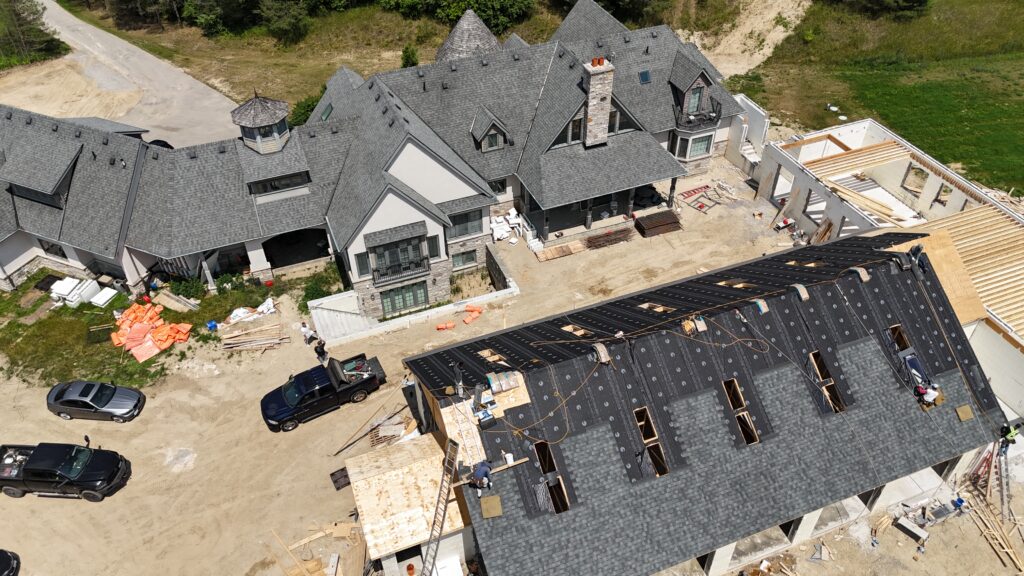
There is a reason most roofs in the GTA are asphalt. Architectural (laminate) shingles are affordable up front, fast to install, available in every colour, and, installed correctly with proper ventilation and the code-required ice-and-water protection, they hold up well to Ontario weather for a couple of decades.
Asphalt is the right call when the up-front cost matters, when you may not stay in the home long enough to recover a premium material’s value, or when you simply want a proven, repairable roof that matches the street. It also handles the GTA’s daily temperature swing well: the shingle flexes with the heat-to-cold cycle rather than fighting it. What keeps the upper floor comfortable in July is the attic ventilation underneath, not the shingle itself, and that is the catch worth knowing: asphalt only reaches the top of its range when the attic below it breathes, because trapped heat and moisture are what age a shingle roof early. Its honest limitation is lifespan: asphalt does not last as long as metal, and Ontario’s freeze-thaw is hardest on the cheaper, thinner grades. The fix is not to avoid asphalt; it is to choose architectural over basic 3-tab and to have it installed properly over a roof that breathes, because on a sloped GTA roof a well-installed architectural shingle is the sensible default for a reason.
Metal roofing: the upgrade case, durability, and trade-offs
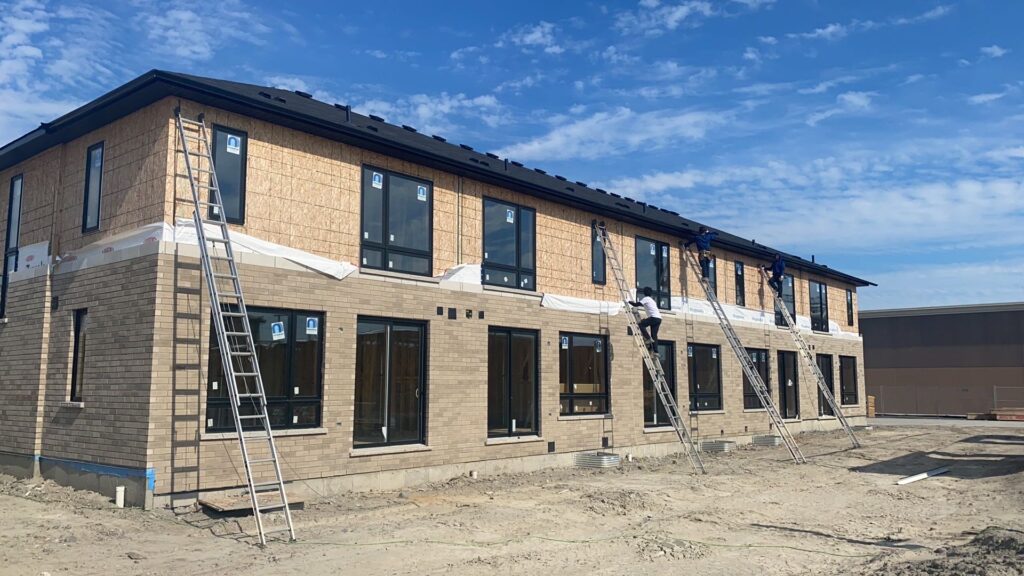
Metal is the long-game choice. A quality standing-seam metal roof can last decades longer than asphalt, often outliving two or three shingle roofs, because it does not absorb water, it sheds snow rather than holding it, and it resists the freeze-thaw cycling that wears shingles down. For a homeowner planning to stay in the house long-term, metal can be the roof you install once and never replace.
The trade-offs are real and worth stating plainly. Metal costs significantly more up front than asphalt, often a multiple of it, so the value is in the decades, not on day one. It is a specialist install, and a standing-seam roof done by a crew that does not work in metal regularly is a real risk. There is also a building-science catch that the metal-roofing ads skip: metal only performs when it is installed with proper ventilation and the right underlayment, because a metal roof over a poorly vented attic can drive condensation against the cold underside of the panels and rot the deck from inside faster than a shingle roof would. The benefit of metal in this climate is that it sheds snow and resists freeze-thaw, not simply that it “does not absorb water.”
For a house, standing-seam, with its concealed fasteners, is the metal worth having. Exposed-fastener steel, the panel with screws driven through the face, is really a barn and outbuilding product: its rubber-gasketed screws become a freeze-thaw maintenance liability on a home, and they tend to need attention within about a decade, which is exactly the headache a metal roof is supposed to spare you. And metal is not a fit for every roof; on a low-slope or flat section it does not belong at all. Metal is worth it in Ontario when you are staying, when the roof’s slope suits it, when it is vented correctly, and when you value the durability and the snow-shedding enough to pay for the decades.
Flat and low-slope membranes: additions, semis, and modern builds
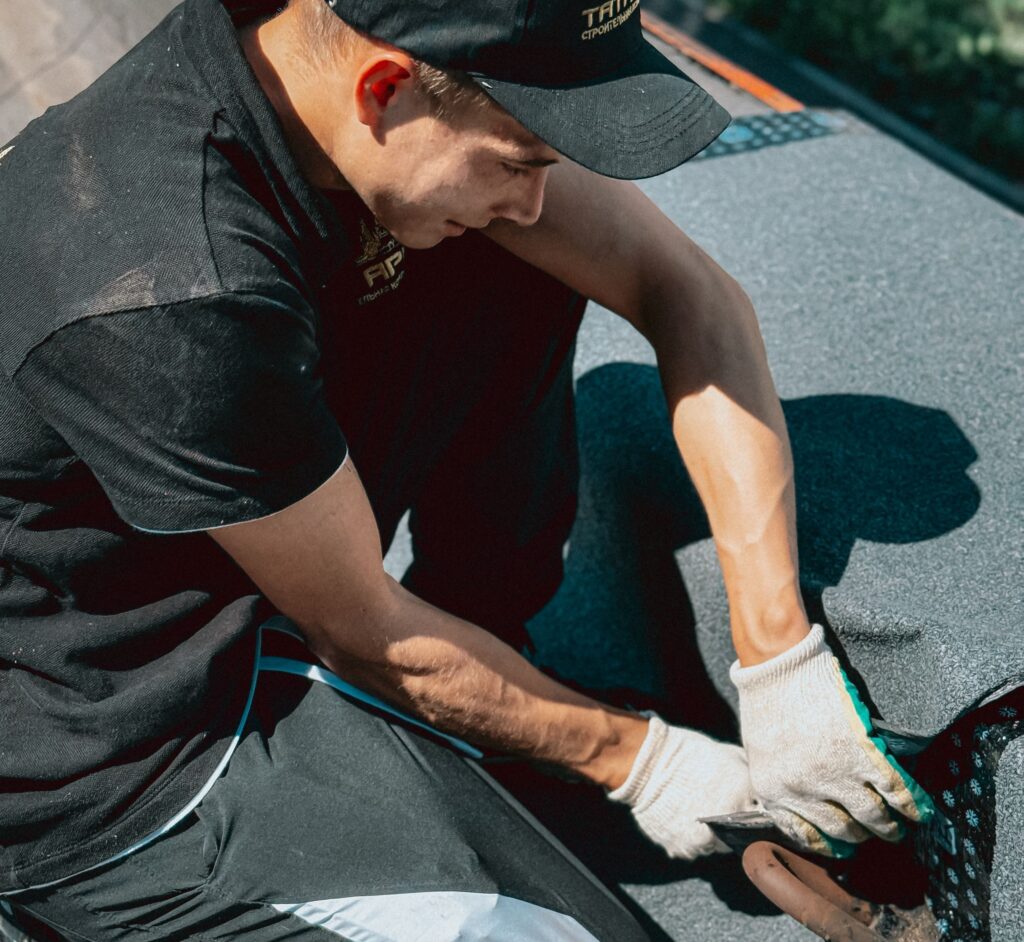
This is the part the shingle-versus-metal guides skip, and it matters here because so many GTA homes have a flat section. A flat or low-slope roof, the rear addition on a semi, the converted garage, the laneway suite, the modern flat-roofed build, is not a candidate for shingles or standard metal. It needs a membrane: EPDM, TPO, or modified bitumen, chosen for the slope, the drainage, and how the roof is used.
If your home is a combination, sloped main roof and flat addition, the right answer is usually the right material for each, not forcing one material across both. Trying to shingle a roof that is too flat to shed water is one of the most common ways a roof leaks early in this city.
This is also where the choice of roofer matters more than the choice of material. On a combination roof, the place that actually fails is the transition zone, the line where the sloped roof meets the flat section, because that is where two different systems and their flashing have to be married together watertight. Winter does its worst right there: snow and meltwater collect at the pitch change, and an ice dam forming at that line forces standing water backward, up under the flashing, exactly where the two systems meet. A crew that only installs shingles, or only sells metal, often cannot do the membrane side at all, so the transition becomes the weak point. Getting that junction right needs a roofer who works in sloped materials and flat membranes both, which is the real reason the combination roof is a job to hand to a generalist in the best sense, not a single-material specialist. For the full breakdown of the membrane options, see our guide on flat roof replacement; the point here is simply that a flat section is its own decision, made on its own terms.
Side-by-side: asphalt vs metal vs flat membrane
Which roof type suits your GTA property?
| Factor | Architectural asphalt | Metal (standing-seam) | Flat membrane (EPDM/TPO/mod-bit) |
|---|---|---|---|
| Roof slope it suits | Sloped roofs | Sloped roofs | Flat and low-slope only |
| Typical Ontario lifespan | 25–30 years | 40–50+ years | 15–25 years |
| Up-front cost | Lowest of the three | Highest; a multiple of asphalt | Varies; depends on size and access |
| Maintenance | Repairable, periodic checks | Very low; monitor fasteners on exposed-fastener types | Drainage and seam checks |
| Climate fit (GTA freeze-thaw) | Good when installed well and vented | Excellent; sheds snow, resists freeze-thaw, reflects summer heat | Good when it drains; ponding is the enemy |
| Resale feel | Expected and familiar | Premium, long-term selling point | Function over curb appeal |
| Best for | Most sloped GTA roofs, shorter stays | Long-term owners, snow-shedding, install-once | Additions, garages, semis, modern builds |
Put the house first and the answer usually appears. A standard detached or semi with a sloped roof, where you may move within a decade or two, points to architectural asphalt: proven, affordable, and right for the street. The same house, owned by someone planning to stay for the long haul who wants to stop thinking about the roof, makes the case for metal, especially given how well it handles GTA snow and freeze-thaw. A home with a flat rear addition, a converted garage, or a laneway suite has a membrane decision on that section no matter what goes on the main roof, and a modern flat-roofed build is a membrane job throughout. Most real GTA roofs are some combination of these, which is exactly why the material should be matched to each part of the roof rather than chosen as a slogan. As a GAF Certified contractor working in asphalt, metal, and flat membranes across Markham, Toronto, and the GTA, YS Roofing has no reason to push one material, which is the point: the honest recommendation comes from looking at your specific roof, its slope, its condition, and your plans, not from a blanket “metal wins” or “asphalt is cheaper.”
Is a metal roof better than shingles?
Not universally; it is better for some situations and overkill for others. Metal lasts decades longer, sheds snow, and resists freeze-thaw, which makes it excellent for long-term owners on a sloped roof. Asphalt is more affordable up front and entirely sensible if you may move within a couple of decades or want a proven, repairable roof. The better choice depends on your roof’s slope, how long you plan to stay, and what you want to spend.
What is the best roof type for a Canadian climate?
For a sloped roof in a freeze-thaw climate like Ontario’s, metal performs best over time because it sheds snow and does not absorb water, while a well-installed architectural asphalt roof is the proven, affordable standard. For a flat or low-slope section, the best choice is a membrane suited to the drainage. The deciding factor is the roof’s slope and how long you intend to own the home, no closing punctuation.
Is a metal roof worth it in Ontario?
It can be, if you are staying in the home long-term and your roof’s slope suits it. Metal’s longevity and snow-shedding pay off over decades, so the value depends on time: the longer you own the home, the more the higher up-front cost is offset by not replacing the roof again. For a shorter stay, asphalt usually makes more sense.
Can you put metal over a flat roof?
No, not standard metal roofing. Metal sheds water by slope, and a flat or low-slope roof does not have enough pitch for it to drain properly, so it would pond and leak. A flat or low-slope roof needs a membrane, EPDM, TPO, or modified bitumen, instead. If you want to convert a flat roof to a pitched metal roof, that is a structural framing project, not a simple re-roof.
Not sure which suits your roof? What happens next
Book a free roof inspection. We look at your roof’s slope, shape, and condition, and listen to how long you plan to stay.
You get an honest material recommendation for your specific roof, including where a combination of materials makes sense across sloped and flat sections.
If you want to compare options, we walk you through what each would mean for your home over time, with no single material pushed.
When you are ready, you get a clear written scope for whichever direction fits.
If you are weighing your options, start with a roof inspection, see how the materials age in how long a roof lasts in Ontario, or read the membrane breakdown in flat roof replacement: EPDM vs TPO vs modified bitumen. When you are ready to move, this is the page that ends with the right roof for your house: roof replacement in your city.
YS Roofing
Trusted roofing services provider
YS Roofing is a trusted, GAF Certified™ Residential Roofing Contractor with over 15 years of industry experience serving the Greater Toronto Area. Specializing in comprehensive roof replacements, expert repairs, and structural protection, the company is built on a foundation of premium craftsmanship, high-quality materials, and exceptional customer service.