
When water sits on a flat roof, most homeowners reach for the wrong fix. They climb up, clear the leaves out of the drain, watch the puddle shrink, and call it solved. Two weeks later the water is back in the same low spot, because the leaves were never the problem. The roof was built, or has settled, so that water has nowhere to go. On the older flat roofs that cover so much of flat roofs in Toronto‘s housing stock, that is the rule, not the exception.
Here is the short version. Water that still stands on a flat roof more than a day or two after rain is a drainage failure, not a cleaning chore. On older Toronto homes it usually comes down to a roof that no longer slopes to its drains, drains or scuppers in the wrong place, or both. You can clean a drain. You cannot clean a slope. Fixing it properly means rebuilding the drainage, which is why ponding so often turns out to be a replacement conversation rather than a maintenance one.
Why is water pooling on my flat roof?
A flat roof is not actually flat. It is a low-slope roof, designed so that every part of it drains toward a drain or a scupper. When water pools, that design has broken down somewhere, and on older Toronto homes there are a few usual suspects.
The roof has lost its slope. This is not a mystery: an eighty-year-old wood-framed roof has spent decades carrying its own weight, every layer of roofing that was added over the last one instead of torn off, and Toronto’s winter snow loads, and the joists and deck slowly bow under all of it. A sagging spot over a long span, or insulation that was never tapered in the first place, leaves shallow basins where water collects. Older converted houses and additions were often built with minimal slope to begin with.
The drainage is in the wrong place or undersized. A drain set slightly high, a scupper cut above the level water actually reaches, or too few outlets for the roof area all leave water with nowhere to go. On a semi with a single interior drain, one bad location ponds the whole roof.
The drain or scupper is failing, not just clogged. Clearing debris helps if a clog is the only issue. But a drain that has settled, a cracked drain bowl, or a scupper with failed flashing keeps ponding even when it is clean, and now it is leaking too.
The tell is simple, and the industry uses a rule of thumb for it: water that still stands 48 hours after the rain stops is a drainage failure, not weather. If the same low spot fills every time it rains and is still holding water two days later, you do not have a debris problem. You have a slope-and-drainage problem.
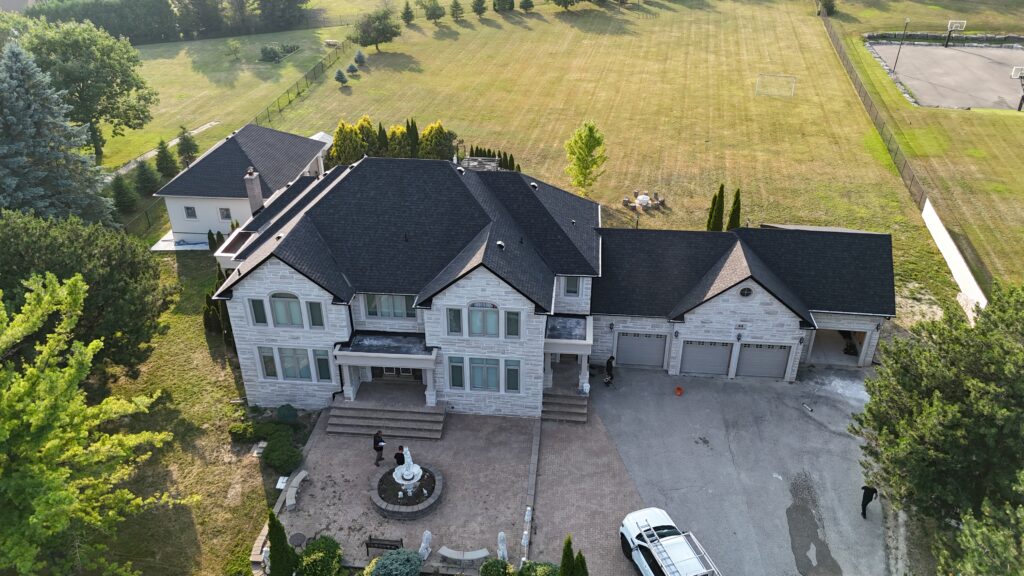
Internal drains, scuppers, and tapered insulation explained
Four things move water off a flat roof, and older Toronto homes use them in different combinations.
Drainage method | What it is | Where it shows up on older Toronto homes |
|---|---|---|
Internal drains | Drains set into the field of the roof that carry water down through pipes inside the building | Common on semis and rowhouses with parapet walls and no place to drain at the edge |
Scuppers | Openings through a parapet or edge wall that let water escape to the outside, often into a downspout | Common on additions and homes where water can be sent off an exterior wall |
Edge drainage (drip edge and eavestrough) | Perimeter edge metal that sheds water off an open edge into an eavestrough and downspout | Common on additions and garages that drain off a low edge rather than through the roof |
Tapered insulation | Insulation cut to build a deliberate slope toward the drains or scuppers | How slope is created or corrected on a roof that does not have enough of its own |
Two more pieces matter on real roofs. Crickets, which are small tapered saddles built between or behind drains and around obstructions, push water that would otherwise sit in a dead corner toward an outlet. And the parapet walls common on Toronto semis, which look tidy but trap water on the roof if the drainage through or over them is not sized and placed correctly. A good drainage design is not one drain in the middle and hope; it is slope, outlets, and crickets working together so that no part of the roof holds water.
One warning specific to older Toronto homes: an interior drain pipe is only safe if it stays warm. When that pipe runs down through an unheated wall cavity or a cold garage addition without insulation or heat trace, the water standing in it can freeze, and a frozen internal drain can burst inside the wall before the roof above it ever leaks. On an older home, fixing drainage is sometimes as much about the pipe inside the wall as the drain on the roof.
A word on the do-it-yourself fix: do not ram a broom handle or a plumbing snake down an older internal drain, and do not hack at a frozen scupper with a shovel. The cast-iron drain pipe in an old Toronto house can be brittle, and the membrane around a scupper is at its most fragile when it is cold. Forcing either one is how a slow ponding problem becomes a burst pipe inside the wall or a punctured membrane and a fast leak into the house. If the drain is blocked or frozen, that is the point to call someone, not to push harder.
What is tapered insulation, and why it matters here
Tapered insulation is rigid insulation manufactured or cut at an angle so that, laid across the roof, it builds a slope toward the drains. It is the standard way to add or correct fall on a flat roof that does not drain on its own, and it does two jobs at once: it insulates, and it makes water move.
It matters in Toronto specifically because of the older housing stock and a constraint worth knowing before anyone quotes you. Tapered insulation adds height. On an older semi or addition where a second-floor walkout door, a low parapet, or a neighbour’s wall caps how much you can build up, you cannot always add enough taper to solve drainage with insulation alone. On those roofs, proper drainage means relocating or adding drains, cutting new scuppers, or building crickets, not just stacking insulation. This is exactly the kind of thing an on-site assessment determines and a generic quote cannot.
How poor drainage shortens roof life and voids the case for repair
Ponding is not cosmetic. It is the single most reliable way to age a flat roof early, and in Toronto the reason is the climate.
Standing water sits on the membrane and works at it constantly. It accelerates UV and chemical breakdown of the surface, it finds the smallest seam or pinhole, and then winter takes over. Water in a low spot freezes overnight, expands, pries the seam or crack a little wider, and melts, dozens of times across a single GTA winter. A roof that drained properly would shed that water before it ever froze. A ponding roof hands the freeze-thaw cycle a target every night for months.
This is why drainage problems so often end the case for repair. You can patch the leak that the ponding caused, but if the water still pools, you have fixed the symptom and left the cause. The next freeze opens a new gap. A patch on a ponding roof is a countdown, which is why an honest answer to recurring ponding leaks is usually to rebuild the drainage as part of a replacement, not to keep chasing the leaks it produces.
Designing proper drainage into a flat roof replacement
The advantage of solving drainage during a replacement is that the whole assembly is open and you can build the slope in correctly rather than working around what is already there.
A proper job starts by finding where water actually goes, not where the drawings say it should. The crew maps the low spots, checks the existing drains and scuppers for condition and placement, and confirms how much height is available before a door or a parapet limits the build-up. Then the slope gets built with tapered insulation toward correctly placed and adequately sized outlets, with crickets added to clear dead corners and the areas behind drains. The drains and scuppers themselves get assessed and, where they have settled or cracked, replaced rather than reused. The new membrane goes on over a roof that finally drains, which is the only version of a flat roof replacement that actually lasts. YS Roofing is a GAF Certified contractor working across Markham, Toronto, and the GTA, and on an older home the drainage design comes from what the roof and the building actually allow, assessed on site.
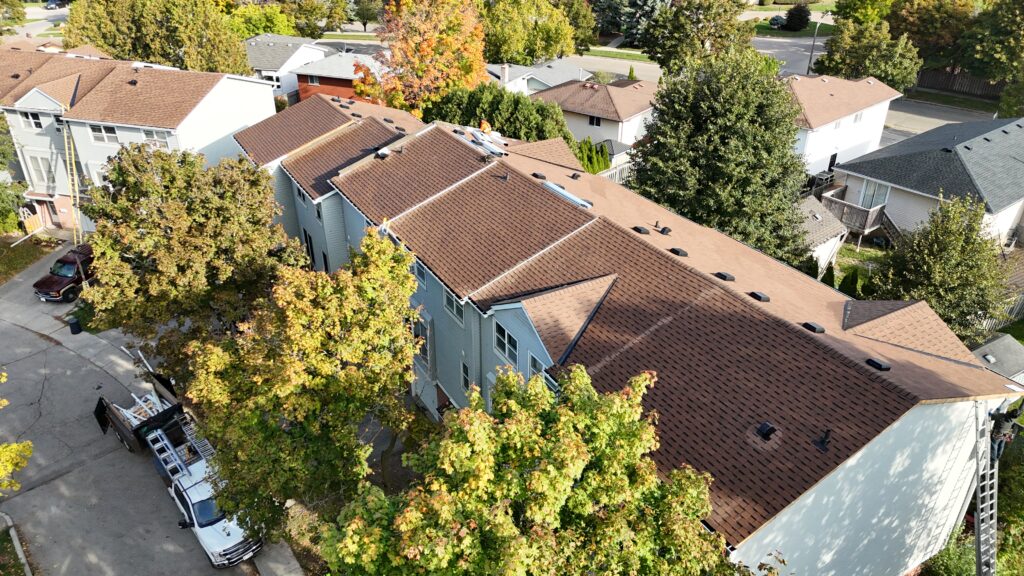
Neighbourhood note: common setups on East York and Etobicoke homes
Drainage is not generic, and the older parts of the GTA each have their patterns. The semi-detached and converted houses common across East York often carry flat rear additions and parapet-walled roofs that rely on interior drains, exactly the setup where one badly placed or settled drain ponds the entire roof. Etobicoke’s mix of post-war homes and additions brings its own combinations of low-slope garage roofs, scupper drainage off exterior walls, and additions that were built with barely any fall. The common thread across both is age: roofs and decks that have deflected over decades, drainage that was minimal when new, and ponding that has been treated as a cleaning issue for years. The fix is not a different drain cover. It is a roof that is re-sloped to drain.
FAQ
Why is water pooling on my flat roof?
Because the roof no longer slopes to its drains, the drains or scuppers are placed or sized wrong, or an outlet has settled or cracked. Clearing debris helps only if a clog is the sole issue. If the same low spot holds water more than a day or two after rain, the problem is slope and drainage, not leaves.
How do you fix drainage on a flat roof?
By rebuilding the slope and the outlets, not by cleaning alone. That means tapered insulation to create fall, drains and scuppers placed and sized for the roof, and crickets to clear dead corners. On older Toronto homes where height is limited by a door or a parapet, it often means relocating or adding drains rather than building up insulation, which is why this is usually done as part of a replacement.
What is tapered insulation?
Rigid insulation cut at an angle so that, laid across the roof, it builds a deliberate slope toward the drains. It both insulates and makes water move, and it is the standard way to add or correct drainage on a flat roof that does not slope enough on its own.
Is ponding water on a flat roof a serious problem?
Yes. Water that lingers more than a day or two accelerates membrane breakdown and, in a GTA winter, freezes and pries seams open. Persistent ponding shortens roof life and is a replacement-grade issue, not a cosmetic one.
Your roof, draining properly: what happens next
- Book a free flat roof inspection. We map where water actually sits, check the drains, scuppers, and slope, and find what is causing the ponding.
- You get a straight answer on whether the drainage can be corrected on its own or whether the roof has reached the point where re-sloping belongs in a replacement.
- If it is a replacement, the scope spells out the drainage design: the slope, the drain and scupper placement, and the crickets, with no surprise line items after tear-off.
- We schedule around the weather and your building, with the warranty and the cleanup standard in writing.
If water keeps pooling on your roof, start with the roof inspection, see how drainage fits into the wider decision in flat roof replacement: EPDM vs TPO vs modified bitumen, or read up on roof replacement across the GTA. A clean drain on a roof that does not slope is not a fix: flat roof replacement in your city.
YS Roofing
Trusted roofing services provider
YS Roofing is a trusted, GAF Certified™ Residential Roofing Contractor with over 15 years of industry experience serving the Greater Toronto Area. Specializing in comprehensive roof replacements, expert repairs, and structural protection, the company is built on a foundation of premium craftsmanship, high-quality materials, and exceptional customer service.