
You have signed off on the roof, and now the questions start. How long will it take? Do we need to leave? What about the kids, the dog, the cars, the garden beds under the eaves? Is the whole thing going to be chaos? A roof replacement is a big, loud, visible job, but a properly run one is also a predictable one, and knowing what each day looks like takes most of the anxiety out of it. Here is exactly what happens, in order, from the morning the crew pulls up to the moment they sweep the driveway and hand you the warranty.
The short version: most residential roof replacements in the GTA are done in one to three days, weather permitting. Day one is tear-off and a look at the deck underneath. The new roof system goes on next, underlayment, ice-and-water protection, flashing, the starter strip, and the shingles or membrane. Then the crew does a final inspection and a full cleanup, including a magnetic sweep for nails, before the warranty is handed over. You do not need to move out, the work is almost all outside, and the biggest variable is the weather.
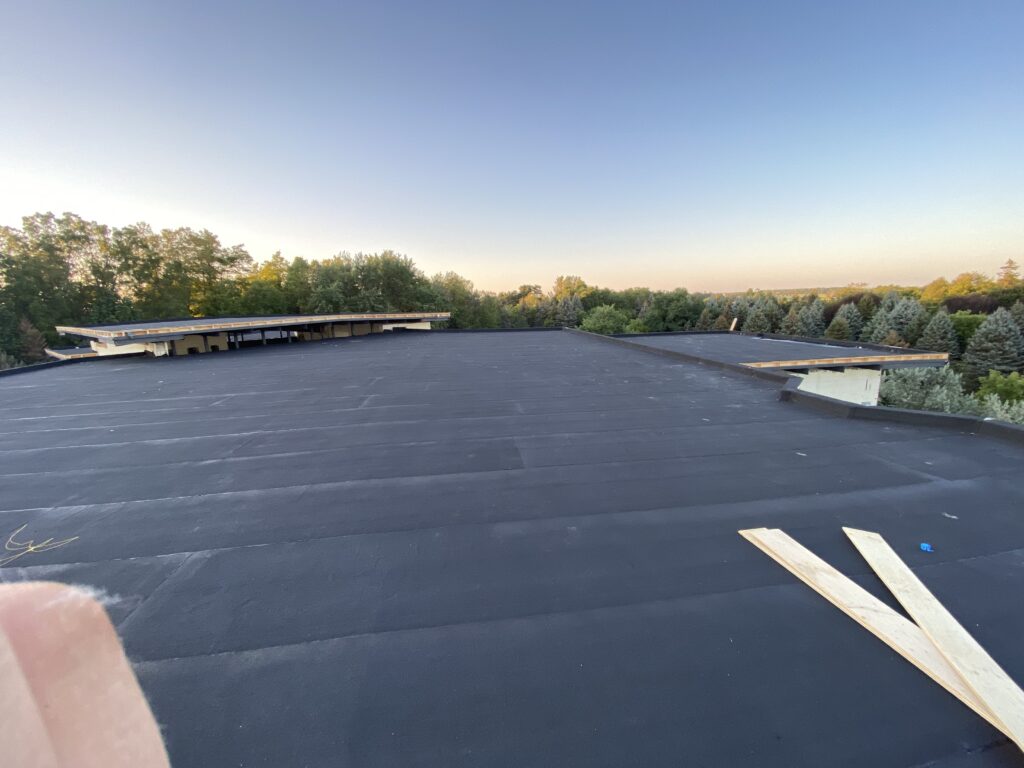
The roof replacement timeline at a glance
Stage | What happens | Typical timing |
|---|---|---|
Morning arrival | Crew arrives, the foreman reviews the setup with you, tarps and protection go up | Day one, usually early, often between 7 and 8 a.m. |
Tear-off and deck check | Old roof stripped to the deck; sheathing inspected and any rot replaced | Day one |
New roof system | Ice-and-water membrane, underlayment, flashing, starter strip, then shingles or membrane, and the ridge vent | Day one to two |
Final inspection and cleanup | Whole roof checked, debris hauled, gutters cleared, magnetic nail sweep, warranty handed over | Final day |
Your confirmed start time and the likely number of days come with the booking and the scope, not from a calculator.
Before the crew arrives: how to prepare
There is not much you have to do, but a few small things make the day smoother and safer.
Move your vehicles well clear of the driveway and the apron the night before. The crew needs more room than a parked truck takes: a dump trailer needs swing space at the rear for its doors, and the material delivery often comes off a boom that needs a wide, clear path to the roof, so leave the whole driveway and the area beside it open, not just a car-sized gap. Take down or cover anything fragile in the attic and on the top-floor walls, since tear-off vibrates the whole roof structure and the occasional picture frame walks off a nail. Clear or cover patio furniture, the barbecue, and delicate garden beds directly below the eaves, where debris and the odd shingle will come down. And plan for the noise: a tear-off sounds like it is coming through the ceiling, so if you work from home, have young children napping, or have a nervous pet, arrange a quieter spot for the loudest day.
That is genuinely the list. The crew handles the rest.
Day one: tear-off and deck inspection
The crew usually arrives early, often between 7 and 8 in the morning, and the foreman knocks to walk you through the setup before any noise starts, so the first sound you hear is not a surprise. Then the job starts with protection and removal: tarps and plywood go up to protect the walls, landscaping, and windows, and the old roof is stripped down to the wood deck. Tear-off is the loud, dramatic part, and it is also the moment the roof finally tells the truth.
With the old roofing off, the deck is exposed and inspected. This is where the surprises live: sheathing that has been quietly soaking under a failing roof, soft spots, rot, or delamination that no one could see until now. Here is exactly what happens if bad decking is found, so there are no surprises: the crew stops, the foreman photographs the damaged sheathing, and you are shown the photos and asked to approve the repair before anything is replaced. Nothing gets quietly added to your job behind your back. Any approved bad decking is then replaced before the new roof goes down, because a new roof over a rotten deck is a new roof with a short life.
Installation: the new roof system goes on
A roof is a system, not just shingles, and it goes on in layers, each doing a job.
First the protection layer: a self-adhered ice-and-water membrane along the eaves and in the valleys, where Ontario’s freeze-thaw and ice dams do their damage, then the underlayment across the rest of the deck. Next the flashing, the metal details around chimneys, vents, walls, and skylights, where most roofs actually leak, gets replaced and sealed. Then the starter strip is run along the eaves and rakes, a detail that is easy to skip and the reason a lot of cheap roofs lose shingles in the first windstorm, before the field shingles are laid from the eaves up. The ridge vent and cap finish the top. A flat or low-slope section is a different job done at the same visit: the membrane is installed over its own prepared substrate, not laid like shingles, which is why a roofer who works in both is worth having. Done correctly, the order and the details matter more than the brand on the bundle, and a good crew is as careful about the flashing and the starter as the field.
Cleanup, final inspection, and warranty handover
The last step is the one that separates a good roofer from a fast one, and it is the part homeowners worry about most.
When the roofing is on, the crew does a final inspection of the whole roof, the flashing, and the ventilation, and then they clean up properly. That means the debris hauled away, the gutters cleared of tear-off mess, and a magnetic sweep across the lawn, driveway, and gardens to pull the nails out of the grass, the single most common complaint about a careless roofing job. A clean site is not a courtesy; it is the sign of a crew that finished the job. Then you get the warranty paperwork in writing, both the manufacturer’s material warranty and the workmanship warranty. This is one reason the contractor’s certification matters: as a GAF Certified contractor, YS Roofing can register the manufacturer-backed warranties that an uncertified installer cannot, so the coverage behind your roof is real and on paper.
How long a roof replacement takes, and what delays it
For a typical GTA home, a roof replacement is a one-to-three-day job. A straightforward asphalt roof on an average house is often a single day; a larger, steeper, or more complex roof, a metal install, or a roof with significant decking to replace runs to two or three. The honest answer for your roof comes from the inspection and the scope, not a calculator.
What stretches the timeline is mostly out of anyone’s hands. Weather is the big one: rain stops a tear-off, because no responsible crew opens a roof it cannot dry in before the next shower, so a wet GTA week can push the schedule. Hidden decking damage found at tear-off adds the time to replace it. And added work, ventilation upgrades, skylights, or a complex flat-to-sloped transition, adds to the day. A good contractor builds the likely weather window into the schedule and keeps you posted rather than leaving you guessing.
If the job runs into a second day, the end of day one is not a crew downing tools and leaving an open roof and a mess behind. Any section that has been opened is dried in with underlayment so it is watertight overnight, tools and materials are secured, the site gets a rough cleanup, and the driveway is cleared enough for the family to park and come and go. You go to bed with a closed-in roof, not an exposed one, and you wake up to the work resuming, not to water in the hallway.
FAQ
How long does it take to replace a roof?
Most residential roof replacements in the GTA take one to three days, weather permitting. A straightforward asphalt roof on an average home is frequently a single day, while a larger, steeper, or more complex roof, a metal system, or one needing significant decking replacement runs to two or three. The accurate timeline for your roof comes from the inspection and scope.
How do I prepare for a roof replacement?
Move vehicles out of the driveway, cover or remove fragile items in the attic and on top-floor walls, clear patio furniture and protect garden beds below the eaves, and plan a quieter spot for the loud tear-off day if you work from home or have young children or a nervous pet. The crew handles tarps, protection, and the rest.
Do I need to leave my house during a roof replacement?
No. A roof replacement is almost entirely exterior work, so you can stay home throughout. The main consideration is the noise during tear-off, which is loud and travels through the house, so some people choose to be out for the loudest stretch, but it is not required. The one exception is a skylight replacement, which needs brief interior access on the upper floor, with drop cloths down to protect the room.
Will the crew need to come inside my home?
For a standard roof replacement, no. The work is on the roof, and the crew does not need to be in your living space; washroom access is arranged separately so they are not relying on yours. The exception is a skylight replacement, which needs short interior access to the room below, done with the floor and furniture protected.
Can it rain during a roof replacement?
A crew will not tear off a roof it cannot close in before rain arrives, so active tear-off is scheduled around the forecast. If rain comes mid-job, the open sections are dried in with underlayment or temporary cover to keep water out, and work resumes when it clears. This is why GTA timelines flex with the weather, and why a contractor who watches the forecast is worth having.
Ready to schedule? What happens next
Book the inspection and get a clear written scope, so you know the material, the timeline, and how decking is handled before the work starts.
We confirm a start date around the weather window and tell you exactly how to prepare, so there are no surprises on the morning.
The crew protects the site, replaces the roof in order, and keeps you posted if the deck or the weather changes anything.
We finish with a full inspection, a proper cleanup, a magnetic nail sweep, and the warranty paperwork in your hands.
When you are ready to move from quote to calendar, this is the step that starts it: schedule your roof replacement. If you are still weighing the number, our guide to what affects the cost of a roof replacement explains what drives it, and you can see the full picture on roof replacement across the GTA.