
Most people replace their roof one leak too late. They wait for water on the ceiling, because a leak feels like the moment a roof “fails.” But by the time a roof leaks, it has usually been telling you for a year or two that it was finished, and the wait has often added soaked insulation and a rotted deck to the bill. The signs that a roof is at the end come well before the drip, and reading them early is the difference between a planned replacement and an emergency one in February.
Here is the short version. A roof is ready to replace when the wear is widespread rather than local: shingles curling and cracking across the main surface, granule loss leaving the black asphalt mat exposed, bald or sagging spots, daylight or staining in the attic, and leaks that keep moving around, especially on a roof at or past its service life. One of those on an otherwise sound roof is usually a repair. Several together, or a roof simply old enough, mean it is time to plan a replacement, and the smart move is to do that before the leak, not after it.
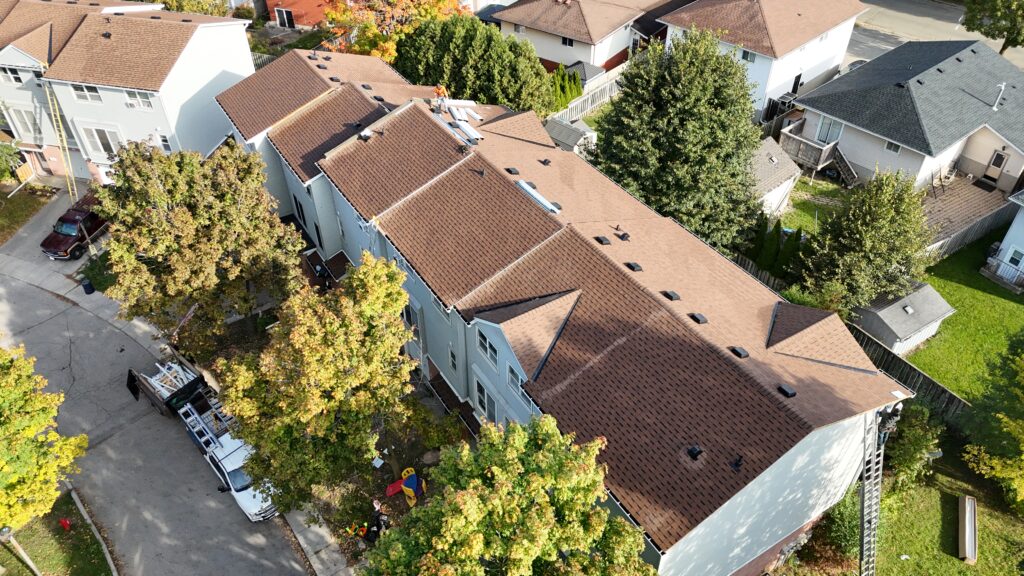
Repair or replace: how to tell the difference
The honest test is not “is it leaking” but “is the failure local or everywhere.” A roof with a single problem on an otherwise healthy surface is a repair: one section of lifted shingles, a flashing detail around a vent, a spot of storm damage. Fix that and the roof keeps doing its job for years.
A roof is ready to replace when the problems are systemic. The same wear that shows in one place is showing everywhere, the shingles have aged out across the whole roof, or water has already worked into the deck. Patching a roof like that is treating one symptom of a whole-roof problem, and the next failure is already forming a few feet away. The clearest tell is repetition: when a roof leaks in a new spot every few months, the patches are not failing, the roof around them is, and that is the signal you have crossed from repair into replacement.
Signs it is time to replace your roof
You can read most of these from the ground or from inside the attic, no ladder required.
Sign | What it usually means |
|---|---|
Curling, cupping, or clawing shingles | The shingles have lost their flexibility with age and weather; widespread curling points to end of life |
Cracked or broken shingles across the main surface | Brittleness from years of sun and freeze-thaw, not a one-off |
Excessive granule loss, with bare patches | The protective surface has worn off and the black asphalt mat is exposed; a few granules off a new roof are normal, bare patches across an older roof are not |
Dark, worn patches across the roof | The mat showing through where the granules are gone, a sign the shingle is failing |
Daylight or staining in the attic | Light through the deck, or stained, damp sheathing, means water is getting in |
A sagging or wavy roofline | Possible moisture or structural issue in the deck below, the most serious sign |
Repeated or migrating leaks | The membrane or shingle layer has aged out, not a single fixable fault |
Age at or past the material’s service life | A roof near the end of its rated life is due regardless of how it looks from the street |
One sign on a sound roof is often a repair. Three or more together, especially on an older roof, is the roof telling you the calendar has run out.
Should you replace a roof that is not leaking yet?
Often, yes, and this is the part most homeowners get backwards. Waiting for a leak is waiting for the damage to spread from the roof into the house. If the shingles are curling and shedding granules across the whole roof, or the roof is past its service life, the leak is not an “if,” it is a “when,” and replacing before it arrives means you avoid the wet insulation, the rotted decking, and the interior repairs that a leak brings. A roof that is visibly worn out but not yet leaking is the best possible time to replace, on your schedule and at a planned cost, rather than in the middle of the storm that finally opens it up.
How roof age and material affect the decision
Age is the first thing to weigh, because it changes how you read everything else. A few worn shingles on a ten-year-old roof are a repair; the same shingles on a twenty-five-year-old roof are a roof near the end. Material matters too: asphalt shingle roofs do not last as long as metal, and the cheaper grades age fastest in Ontario’s freeze-thaw, so the same number of years means different things on different roofs.
If you bought the house and have no idea how old the roof is, there are a few ways to find out: check the seller property information statement from your purchase, look for leftover shingle bundles or a brand and date stamp in the garage or attic, or pull the roofing permit record from your municipality. Our guide to how Long Does a Roof Last in Ontario? lays out the ranges by material, and an inspection turns “I think it is about twenty years old” into an actual answer.
One thing the view from the street misses: in the GTA, roofs often fail from the inside out. A poorly ventilated attic lets warm, moist air condense on the underside of the deck, and severe ice damming at the eaves forces meltwater back up under the shingles, both of which age a roof early no matter how the surface looks. That is why an honest assessment looks at the attic, not just the shingles, and why a proper replacement corrects the ventilation rather than just relaying the surface. As a GAF Certified contractor, YS Roofing builds that into the work, and when the verdict is replacement, the next step is roof replacement in Markham.
What to do once you see the signs
Book a roof inspection so the signs get confirmed on the roof and in the attic, not guessed at from the driveway.
Get the verdict in writing. A proper inspection tells you whether you are looking at a repair, a planned replacement, or a roof with years left, with photographs and a rough sense of remaining life.
Plan rather than react. If replacement is the answer, doing it before the leak means you choose the timing, the material, and the contractor, instead of scrambling after water comes in.
Match the work to your home. When you are ready, the replacement is scoped to your roof, with the ventilation and underlayment upgraded to meet current Ontario Building Code standards.
FAQ
How do I know if I need a new roof?
Look for widespread rather than local wear: shingles curling, cracking, or shedding granules across the whole roof, bald or sagging spots, daylight or staining in the attic, and repeated leaks that move around. Add the roof’s age. One isolated problem is usually a repair; several of these together, or a roof at or past its service life, mean it is time to replace.
What are the signs of a bad roof?
The common ones are curling, cupping, or missing shingles, cracked or brittle shingles, excessive granule loss that leaves the black asphalt mat exposed, a sagging roofline, daylight or water stains in the attic, and leaks that keep returning. Spread across the roof, these point to a roof at the end of its life rather than one needing a single repair.
How many years does a roof last before replacement?
It depends on the material. In Ontario, asphalt shingle roofs are generally replaced every 15 to 30 years depending on grade. A standing-seam metal roof lasts 40 years or more, while an exposed-fastener steel roof needs its screws and gaskets serviced around the 15-to-20-year mark. Flat membranes such as EPDM, TPO, and modified bitumen run roughly 15 to 25 years. Freeze-thaw, ice dams, and attic ventilation push roofs toward the shorter end of those ranges, so age plus visible wear, not the warranty number alone, should drive the decision.
You are seeing the signs: what happens next
Book a free roof inspection so the signs get confirmed on the roof and in the attic, not guessed from the ground.
You get a written verdict with photographs: a repair, a planned replacement, or a roof with life left, plus a rough sense of how long.
There is no pressure. If the roof has years left, we tell you so and what to watch for.
If it is time, you get a clear written scope and can plan the work on your schedule, not the weather’s.
If the signs above describe your roof, the next step is to have them read properly: book a roof inspection, or check the lifespan ranges in how long a roof lasts in Ontario. When the verdict is replacement, this is the page that takes it from here: roof replacement in Markham.
YS Roofing
Trusted roofing services provider
YS Roofing is a trusted, GAF Certified™ Residential Roofing Contractor with over 15 years of industry experience serving the Greater Toronto Area. Specializing in comprehensive roof replacements, expert repairs, and structural protection, the company is built on a foundation of premium craftsmanship, high-quality materials, and exceptional customer service.