
In Ontario, asphalt shingles typically last 15 to 20 years for basic 3-tab and 25 to 30 for architectural laminate, a quality metal roof 40 to 50 or more, and a flat roof membrane roughly 15 to 25. Where your roof lands inside its range is decided by three things that have nothing to do with the brand: the grade of material, the quality of the installation, and whether the attic underneath it breathes. The number printed on the shingle wrapper is a laboratory rating, not a forecast for a roof that freezes and thaws dozens of times a winter.
That gap, between the warranty figure and what the roof actually gets, is why so many Ontario homeowners replace a roof that was sold to them as lasting far longer than it did
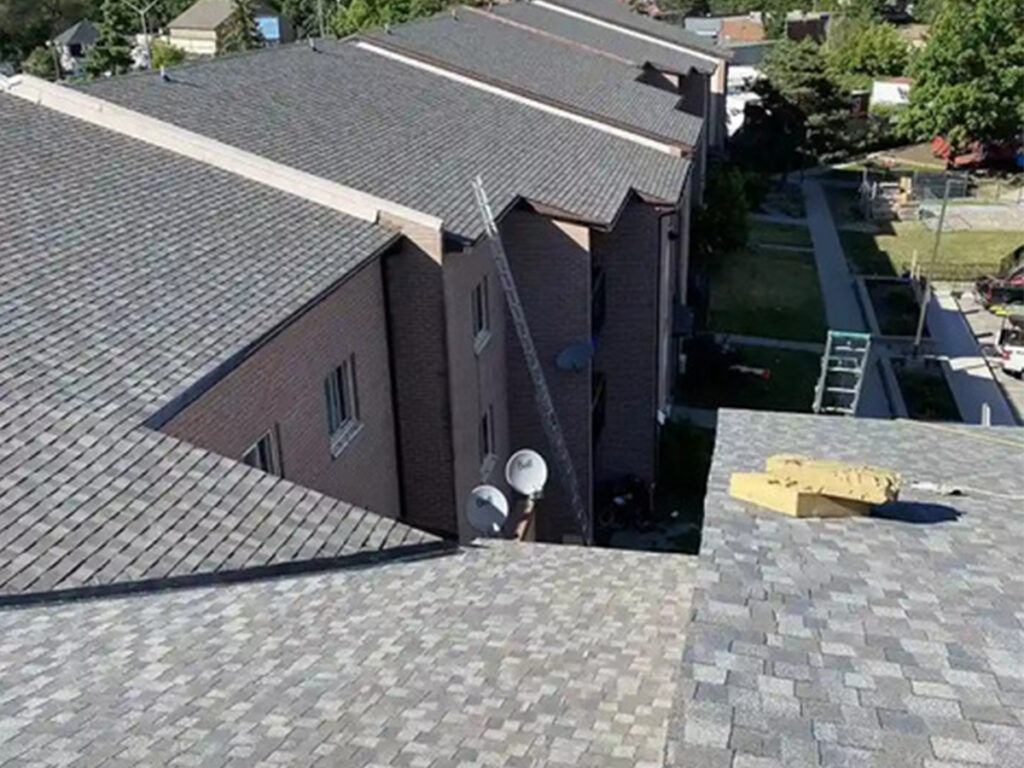
Average roof lifespan in Ontario by material
| Roofing material | Typical Ontario lifespan | Notes |
|---|---|---|
| Asphalt 3-tab shingles | 15–20 years | The lightest asphalt option, and the one that ages fastest in freeze-thaw |
| Architectural (laminate) asphalt shingles | 25–30 years | The GTA default. Heavier, and more wind- and weather-resistant than 3-tab |
| Standing-seam metal | 40–50+ years | Longest-lived common option. Concealed fasteners, sheds snow well |
| Exposed-fastener steel | 30–40 years | Durable, but the gasketed screws are a wear point that needs attention |
| Cedar shake | 20–30 years | Needs maintenance. The lifespan drops sharply without it in a wet climate |
| Slate and clay tile | 75–100 years | Rare and heavy. Outlives everything else where the structure supports it |
| Flat roof membranes (EPDM, TPO, modified bitumen) | 15–25 years | Drainage and install quality matter more than the membrane brand |
These are realistic Ontario ranges rather than lab numbers. Where your roof lands inside its range, or falls short of it, is decided by the sections that follow.
Asphalt shingles
Asphalt sits on most GTA homes for good reasons: it installs quickly, it suits the climate, and the better grades hold up well. The catch is that “asphalt” covers two very different products.
Basic 3-tab shingles are thin and light, and in Ontario’s freeze-thaw they curl, crack, and shed granules toward the lower end of their range. On an exposed lot with a starved attic they can fall short of it altogether.
Architectural shingles are heavier and more weather-resistant and reach the longer range, but do not read “architectural” as one product. There is a real distance between a premium heavyweight laminate and the builder-grade laminate that goes onto new subdivision homes in volume, and the lighter end of that category behaves much more like the band below it than the band it is sold in. If your roof came with the house rather than being chosen by you, assume the builder specified to a price and read the lower half of the range.
The “lifetime” or “30-year” label on either refers to the product warranty under ideal conditions, not the years you will get on a Toronto roof, which is usually fewer.
Metal roofing
Metal is the longevity play. A quality standing-seam metal roof can outlast two or three asphalt roofs, commonly reaching 40 to 50 years or more, because the panels do not absorb water, they shed snow rather than holding it, and the concealed fasteners are not exposed to weather.
Exposed-fastener steel is the simpler of the two systems and still long-lived at 30 to 40 years, with the caveat that the rubber-gasketed screws are the wear point and need checking and resealing over the decades. In Ontario, metal’s snow-shedding and freeze-thaw resistance are exactly the traits that matter.
Flat roof membranes
A flat roof does not last on the brand. It lasts on the drainage and the install, and the three common membranes fail in different ways.
Modified bitumen carries a granular surface that weathers and sheds granules much the way asphalt does, so the surface is the wear point. EPDM and TPO are smoother single-ply membranes whose seams are the weak link, which means the adhesive or welded joints tend to go first. TPO has the added advantage of a reflective white surface that shrugs off Toronto summer sun rather than absorbing it.
Across all three, a membrane on a roof that ponds water and was seamed poorly will fail at the bottom of the 15 to 25 year range or sooner, while the same membrane on a roof that drains and was installed correctly reaches the top of it. This is why two identical flat roofs across the street from each other can be a decade apart.
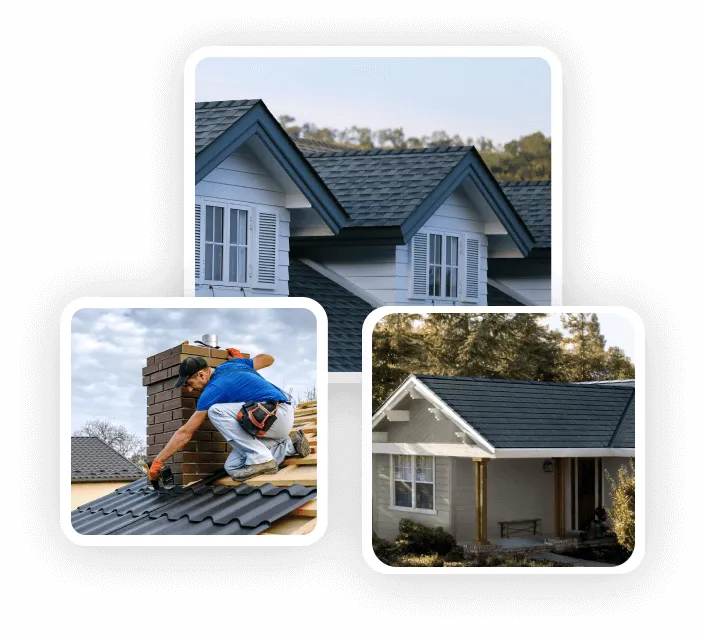
How often should a roof be replaced in Ontario?
The honest answer is that a roof is replaced when it is finished, and the calendar only tells you when to start paying attention.
Working from the ranges above, a 3-tab asphalt roof is generally replaced every 15 to 20 years, architectural shingles every 25 to 30, metal every 40 to 50 or more, and a flat membrane every 15 to 25.
One thing worth stating plainly, because it looks like a contradiction otherwise. YS Roofing treats a roof past twenty years as a roof worth assessing rather than a roof worth replacing. Those are different sentences. On a 3-tab roof, twenty years is at or past the end of the range and replacement is the likely answer. On a good architectural roof, twenty years may be two thirds of the way through and the honest answer is that you have years left. The twenty-year mark is when the question becomes worth asking, not when the answer becomes yes.
What moves a specific roof off that schedule is condition, not age. A twenty-year-old roof with a well-ventilated attic, a sound deck, and no widespread granule loss may have several good years left. A fifteen-year-old roof on a starved attic, with curling across the field and staining on the underside of the sheathing, does not. Age tells you which question to ask. The inspection answers it.
What makes Ontario roofs age faster
A roof here does not age on the manufacturer’s schedule. It ages on the weather’s, and four forces do most of the work.
Freeze-thaw is the big one:
Water works into a shingle edge, a seam, or a small crack, freezes overnight, expands, pries the gap wider, then melts and does it again, dozens of times across a single winter. Every cycle ages the roof a little more than a calendar year would, which is why the same shingle lasts longer in a mild climate than it does here.
Ice dams come next:
When heat escaping from the attic melts snow on the upper roof and it refreezes at the cold eaves, it builds a dam of ice that forces meltwater back up under the shingles. That is both a leak risk and an accelerant of wear along the most vulnerable part of the roof, and it is largely a function of attic insulation and ventilation rather than the shingles themselves. A self-adhered ice-and-water protective membrane along the eaves is what keeps that backed-up meltwater off the deck, and a roof that is short on eave protection is far more exposed when the dams form. See how to spot and prevent ice dams.
Then there is the damage you cannot see from the ground:
In an Ontario winter, warm moist air from the house rises into the attic, and if the soffit intake and the ridge or roof exhaust are not balanced, that moisture condenses on the cold underside of the roof deck and, over seasons, rots the sheathing from the inside out. A roof can look sound on top and be failing underneath, which is how a poorly ventilated roof reaches the end of its life well before the shingles have used up their years.
Sun and heat finish the job:
Ontario summers bake the south- and west-facing slopes, and the constant expansion and contraction between a hot afternoon and a cold night fatigues the material all year, not only in winter. Dark roofs and poorly ventilated attics run hotter and age faster.
And the pitch of the roof decides how hard all four hit:
A shallow roof holds snow longer, drains more slowly, and takes summer sun closer to straight on, so it works harder than a steep roof of the same material and the same age. Two identical shingles on the same street, one on a low-slope back-split and one on a steep gable, are not on the same clock. If your roof is shallow, read the lower half of every range on this page.
The common thread is that none of these is about the shingle alone. Ventilation, attic temperature, drainage, and install quality decide whether your roof reaches the top of its range or the bottom. How GTA freeze-thaw cycles shorten a roof’s life covers the mechanism in more detail.
Signs your roof is reaching the end of its life
Age is the first clue, not the verdict. A roof in the back half of its range showing several of these together is telling you it is near the end:
- Curling, cupping, or cracked shingles across the field rather than in one spot
- Bald patches where the granules have gone and the black mat underneath is showing through. Every roof sheds some granules from the day it is installed, so a few in the downspout mean nothing on their own. What matters is heavy loss in one season, or bare patches you can see from the ground
- Daylight visible in the attic, or staining and damp on the attic side of the deck
- A sagging or wavy line along the roof
- Repeated leaks that move from spot to spot
Read missing shingles carefully, because they cut both ways. Brittle, curled shingles that tear off in a windstorm are an old roof telling you it is finished. Shingles that blow off an otherwise newer roof usually point to an install problem, high nailing or a thermal seal that never set, which is a repair rather than a death sentence.
One isolated issue on an otherwise sound roof can be a repair. Several of these together on a roof that is twenty years old is a roof at the end of its life, whatever the warranty says. Signs you need a new roof goes through each of them properly.
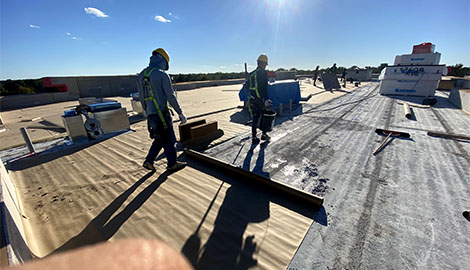
Should you repair or replace as a roof ages?
The honest rule is about where the roof sits in its lifespan, not only what a fix costs today.
A localized problem on a roof with years left, a few lifted shingles or a single flashing failure, is a repair. The same problem on a roof in the last few years of its range is usually a signal to plan the replacement, because spending on a roof that will need replacing soon is money spent twice.
There is also arithmetic most homeowners miss. A roof near the end that keeps getting patched quietly costs more than a planned replacement, particularly once water reaches the deck and the next job has to include new sheathing. The question is not only whether this can be fixed but whether this roof is worth fixing, and the answer turns on its age, its material, and how much life an inspection finds left in it.
As a GAF Certified™ contractor working across Markham, Toronto, and the GTA, YS Roofing sees the difference between the warranty number and the real-world number on local roofs every week, which is why the recommendation is always based on what the roof is actually doing rather than on a figure printed on a wrapper years ago.
Frequently asked questions
What is the average lifespan of a roof in Canada?
There is no single national figure, because the answer depends on the material and the climate the roof sits in. Across Canada the common ranges are 15 to 20 years for basic 3-tab asphalt shingles, 25 to 30 for architectural shingles, 40 to 50 or more for quality metal, and 15 to 25 for a flat membrane. In Ontario specifically, freeze-thaw cycling, ice damming, and attic ventilation quality push roofs toward the shorter end of those ranges more often than the longer one.
How often should a roof be replaced in Ontario?
It depends on the material, and on condition rather than age alone. A 3-tab asphalt roof is generally replaced every 15 to 20 years, architectural shingles every 25 to 30, metal every 40 to 50 or more, and a flat membrane every 15 to 25. Age plus visible wear, not the warranty number, should drive the decision.
How long do asphalt shingles last in Canada?
Basic 3-tab shingles generally reach 15 to 20 years and architectural shingles 25 to 30, with Ontario roofs tending toward the lower half of each range. The grade of shingle and the state of the attic ventilation move the number more than the brand does.
How long does a metal roof last?
A standing-seam metal roof commonly reaches 40 to 50 years or more. Exposed-fastener steel typically reaches 30 to 40, with the gasketed screws as the maintenance item. Both comfortably outlast asphalt in this climate.
How long does a flat roof last?
Roughly 15 to 25 years for EPDM, TPO, and modified bitumen. Drainage and seam quality decide where inside that range a given roof lands. See flat roof replacement in the GTA.
Does a roof warranty transfer when I sell my house in Ontario?
Material warranties are often transferable once, usually within a defined window after the original installation and sometimes with a transfer fee, and the terms vary by manufacturer and by warranty tier. Workmanship warranties are set by the contractor and follow their own terms. If the roof is recent and you are selling, it is worth locating the original registration paperwork rather than assuming either one carries over.
Not sure where your roof stands? What happens next
- Book a free roof inspection. The material, the wear, the attic ventilation, and the deck are all checked, so the answer accounts for what is happening underneath and not only what shows from the street.
- You get a straight answer: roughly how much life is left, and whether you are looking at maintenance, a repair, or planning a replacement.
- If replacement is on the horizon, we walk through the material options and what each would mean for your home, with nothing pushed before the roof has been seen.
- If the roof has years left, we tell you that too, and what to watch for in the meantime.
If you are trying to gauge how much life your roof has, start with what a roof inspection covers, weigh the options in choosing the right roof type for GTA homes, or see the full picture in roof replacement in the GTA: the complete homeowner guide.
The warranty number is not your answer. Your roof is.
Roof replacement service areas across the GTA, Durham Region, and Peterborough: Markham and residential roof replacement · Toronto · North York · Scarborough · Etobicoke · Richmond Hill · Pickering · Ajax · Whitby · Oshawa · Peterborough
YS Roofing
Trusted roofing services provider
YS Roofing is a trusted, GAF Certified™ Residential Roofing Contractor with over 15 years of industry experience serving the Greater Toronto Area. Specializing in comprehensive roof replacements, expert repairs, and structural protection, the company is built on a foundation of premium craftsmanship, high-quality materials, and exceptional customer service.