
Yes. A roof can be replaced through a GTA winter, and it is done across Ontario every year. Asphalt shingles are hand-sealed instead of relying on the sun to set the adhesive strip, materials are kept warm so they stay flexible, and flat sections lean on torch-applied membrane that bonds on contact in the cold. The real limits are a sustained deep freeze, snow and ice on the deck, and shorter daylight. The result depends far more on the crew’s cold-weather experience than on the month. A failing or leaking roof should not wait until April. A sound roof with years left comfortably can.
There is a piece of advice that circulates every autumn: never replace a roof in winter, wait for spring. It is largely American advice, and it does not survive contact with a Canadian winter. In Ontario, “wait for spring” can mean waiting four or five months while water finds the deck, the insulation, and the ceiling below.
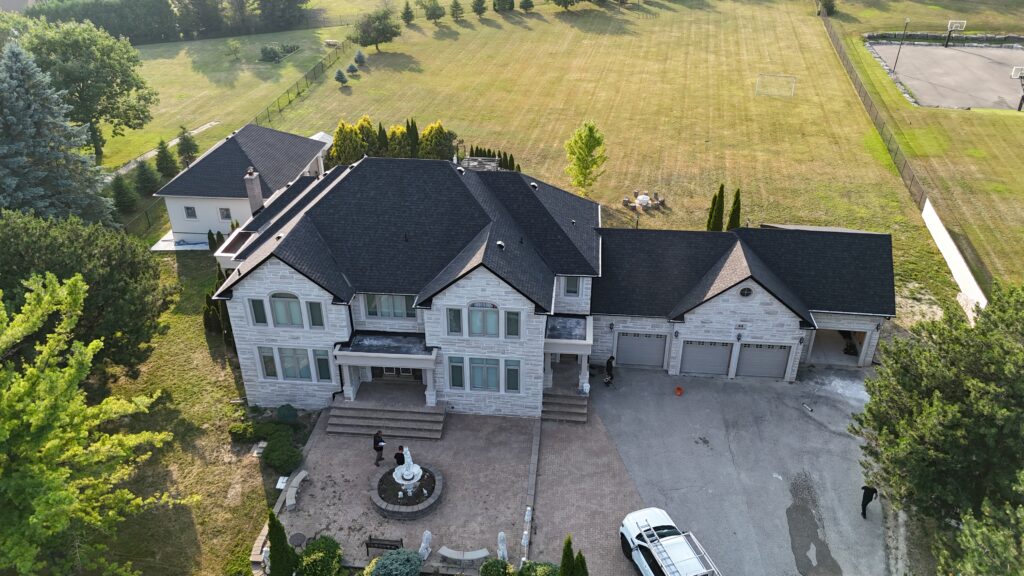
Can a roof be replaced in winter? The honest answer
Yes, but it is not the same job as a July install, and pretending otherwise is how it goes wrong.
The difference is technique. In warm weather, asphalt shingles seal themselves: the adhesive strip on each shingle softens in the sun and bonds to the one below. In the cold, that strip will not activate on its own, so a proper winter crew hand-seals each shingle with roofing cement, creating the bond the sun would have made. Skip that step, as a crew rushing through the cold will, and you get a roof that has not sealed and can lift in the first winter windstorm.
Done correctly, with hand-sealing and careful handling, a winter roof is every bit as sound as a summer one. The variable is not the season. It is the roofer.
This is why manufacturers tie cold-weather installation to the contractor rather than to the calendar. As a GAF Certified™ contractor working across Markham, Toronto, and the GTA, YS Roofing installs in winter the way the cold demands, and says so plainly when a roof can safely wait for spring instead.
My roof is leaking and it is winter. What now?
This is the situation that brings most people to this page, and the answer is different from the general one above.
A leak in winter is not a wait-and-see problem. Water entering through a compromised roof in December does not pause until April. It soaks the insulation, which stops it insulating, which makes the attic warmer, which worsens ice damming at the eaves, which drives more water back under the shingles. It is a loop that accelerates, and every week of it adds to the eventual repair.
The first question is not whether to replace the roof. It is where the water is actually coming from, because a winter leak is frequently not a hole in the roof at all. Three common causes in a GTA January look identical from inside the house:
- Ice damming at the eaves, forcing meltwater back up under the shingles
- Condensation in the attic, where warm moist household air escapes upward through gaps around light fixtures, bath fans, and the top of the walls, meets a cold deck, and rains back down. It reads as a leak, but the fix is air sealing and ventilation rather than roofing
- Genuine storm damage, where wind has lifted or torn shingles and opened the assembly
They call for very different responses, and replacement is only one of them. Storm damage on a sound roof is frequently a repair. Ice damming and condensation both point back into the attic, at insulation, air sealing, and ventilation, which is work that can be done without touching the shingles. Replacement enters the picture when the roof was already near the end and the winter simply found it. That is why the first step in winter is a look inside the attic, not a quote. See how to spot and prevent ice dams, how GTA freeze-thaw cycles shorten a roof’s life, and what a roof inspection covers.
Can it just be patched until spring?
Often, yes, and it is a fair question that most roofing pages skip.
If the leak is coming from a definable point, a lifted section, a flashing failure, or storm damage in one area, a targeted winter repair is a real option and frequently the right one. It buys you the months to plan a replacement properly rather than choosing a contractor in a panic in February.
Two honest caveats. A winter patch is a holding measure rather than a fix, and on a roof that is already at the end of its life it is money spent on time rather than on a roof. And if the water is coming from ice damming or attic condensation, patching the outside will not stop it, because the problem is not where the stain is.
The way to tell which situation you are in is the same either way: get someone to look, including in the attic, before anything is decided.
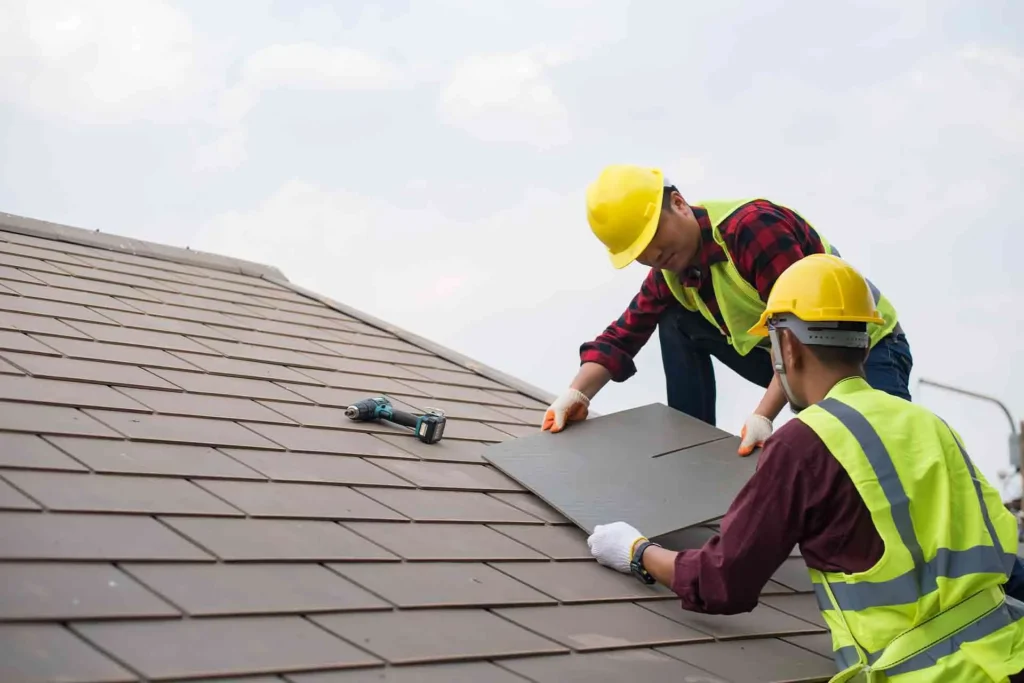
How cold is too cold for shingles and membranes
If you are here because of a leak, the section above is the one you need and this one is the technical detail behind it.
There is a real floor, and it is about both the material and the crew.
Asphalt shingles get brittle in the cold, so they have to be kept warm and handled gently, because a frozen shingle can crack when it is bent or nailed. Hand-sealing keeps asphalt viable well below freezing, but once temperatures drop into a sustained deep freeze, even hand-applied cement struggles to bond and the shingles become too brittle to work safely. That is the point to wait for a milder window.
| Material | In winter | The limiting factor |
|---|---|---|
| Asphalt shingles | Workable with hand-sealing and warm storage | Brittle when too cold, and the sealant will not set in a deep freeze |
| Self-adhered membranes (ice-and-water, peel-and-stick) | Need a primer and a minimum temperature to stick | Lose tack in the cold |
| Modified bitumen (flat roofs) | The cold-weather workhorse, torch-applied and bonds on contact | Open flame, so a specialist job |
| EPDM and TPO (flat roofs) | Possible, but adhesives have cold thresholds | Glue and weld quality in the cold |
The other limit is not the thermometer at all. Snow and ice have to be cleared and the deck has to be dry before anything goes on, and the crew has to work safely on a cold, potentially slick roof. A good winter contractor watches the forecast and works the milder windows that a GTA winter reliably provides, rather than forcing a job in a blizzard.
The cold-weather techniques a proper crew uses
This is what separates a roof that lasts from one that lifts in February.
The shingles are kept warm and brought up in small batches so they stay flexible and do not crack under the nail gun. That is less trivial than it sounds. A roof’s worth of bundles does not stay warm sitting on a frozen driveway, so keeping them workable means proper heated storage and carrying them up a few at a time. Bundles left waiting on a cold deck stop being warm very quickly.
Each shingle is then hand-sealed with roofing cement so it bonds immediately rather than waiting for a sun that will not come for months. Be clear about what that means for the job: hand-sealing every tab on a two-storey roof, with cement that is itself stiff in the cold, adds real hours to the work on a day that already has less daylight in it. A winter roof done properly takes longer than the same roof in July. A crew quoting winter at summer speed is telling you which corner they intend to cut.
Self-adhered membranes get the primer and the temperature they need, or the work waits for the window where they will stick. On flat sections, torch-applied modified bitumen does the heavy lifting because the flame creates the bond on contact regardless of the cold. And the whole job is scheduled around weather and daylight, with the crew closing in each opened section before the day ends so nothing sits exposed overnight.
None of this is exotic. It is the difference between a roofer who works in winter and one who is pretending the season is summer.
When a winter replacement makes sense
Sometimes waiting is the expensive option.
If the roof is actively leaking, the choice is not winter versus spring. It is a winter replacement versus months of water running into the deck, the insulation, and the rooms below. If a storm has torn the roof open, the same logic applies, and an insurance claim is often in play, which moves on its own timeline rather than yours. See how to file a roof insurance claim after a GTA wind or hail storm.
Beyond emergencies, the off-season has a quieter advantage. Crews are less stretched than during the spring and fall rush, so scheduling is easier and the wait between the decision and the work is shorter. If your roof is at the end of its life and you already know it needs replacing, doing it in a mild winter window rather than joining the queue in May can simply get it done.
When to wait for spring
Winter is not always the answer, and an honest roofer will tell you so.
If your roof is sound and has years of life left, there is no reason to replace it in the cold. That is a job for a comfortable spring or autumn window. If the forecast is a sustained deep freeze with no mild break, the materials and crew safety argue for waiting until it lifts. And if the work is discretionary, the upgrade you have been considering rather than a roof that is failing, there is nothing to be gained by doing it in January.
The test is simple. Is the roof failing or about to fail, or can it safely wait? A failing roof should not limp through an Ontario winter. A sound one can comfortably wait for better weather, and we would rather tell you that than sell you a January job you do not need.

Frequently asked questions
Can you install shingles in cold weather?
Yes, with the right technique. Because the self-sealing strip on an asphalt shingle will not activate without warmth, a winter crew hand-seals each shingle with roofing cement so it bonds immediately, and keeps the shingles warm so they stay flexible and do not crack. Installed this way, a cold-weather shingle roof is as sound as a summer one. Installed without hand-sealing, it may never seal properly and can lift.
Is it alright to have roofing done in late November or December, or is it better to wait until spring?
Late autumn and early winter are usually a good window rather than a compromise. Temperatures in the GTA are typically still workable, the spring and fall rush has passed so scheduling is easier, and the roof is closed in before the hardest weather arrives. The decision only becomes finely balanced once a sustained deep freeze sets in. If the roof is failing, late November is a considerably better answer than April.
What temperature is too cold to roof?
There is no single cutoff, because it depends on the material and the method. Hand-sealing keeps asphalt workable well below freezing. What stops the work is a sustained deep freeze, where the shingles turn brittle enough to crack when handled and even hand-applied cement struggles to bond. A crew that watches the forecast will work the milder windows rather than push through the coldest stretch.
Is it bad to replace a roof in winter?
Not in itself. A winter roof installed with cold-weather methods performs the same as a summer one. A winter roof installed by a crew skipping those methods to get off the roof faster is a genuinely worse product. The season is not the risk. The shortcut is.
Should I shovel snow off my roof?
Usually no, and doing it yourself is how people damage shingles and fall off ladders. Roofs in this region are designed for the snow loads the climate produces, so ordinary accumulation is not by itself a reason to act. The cases that are worth acting on are heavy wet accumulation on a low-slope or flat roof, visible sagging, or ice damming already forcing water inside, and each of those is worth a professional look rather than a shovel. If you do clear anything, do it from the ground with a roof rake and keep the rake off the shingles themselves, because cold shingles are brittle and scrape easily. Stay off the roof.
Can you replace a flat roof in winter?
Yes, and flat roofs are often the easier winter job. Torch-applied modified bitumen bonds on contact regardless of the cold, which is why it is the cold-weather workhorse. EPDM and TPO are possible but their adhesives and welds have cold thresholds, so the material choice may shift with the season. See flat roof replacement in the GTA.
What is the best time of year to replace a roof in Ontario?
Late spring through early autumn is the most comfortable window, and it is also the busiest, which means longer waits. Late autumn is frequently the sweet spot: workable temperatures, a shorter queue, and the roof closed in before winter. The worst time is whenever the roof has already failed, because at that point the season stops being the deciding factor.
A failing roof should not wait for spring: what happens next
- Book a free roof inspection. We tell you honestly whether the roof can safely wait for spring or whether it should not, and in a winter leak we look in the attic first to find out whether you are dealing with damage, ice damming, or condensation.
- If it should be done now, you get a clear written scope including the cold-weather methods, the hand-sealing, the warm material handling, and the schedule around the weather windows.
- The crew works the milder windows a GTA winter provides, clears snow and dries the deck before any work, and closes in each section before the day ends.
- You get the same warranty as any other season, and a straight answer about cleanup. Nails and torn shingle tabs disappear into snow, and no magnet sweeps a snowbank clean, so cleanup in January is a safe site when the crew leaves and a proper sweep once the ground is clear enough to do one. Ask any winter roofer how they handle it. A roofer promising you a July standard of cleanup in January has not done many January roofs.
If you are weighing whether your roof can hold until spring, how long a roof lasts in Ontario helps you place it, and roof replacement in the GTA: the complete homeowner guide covers the full decision.
Roof replacement service areas across the GTA, Durham Region, and Peterborough: Markham and residential roof replacement · Toronto · North York · Scarborough · Etobicoke · Richmond Hill · Pickering · Ajax · Whitby · Oshawa · Peterborough

YS Roofing
Trusted roofing services provider
YS Roofing is a trusted, GAF Certified™ Residential Roofing Contractor with over 15 years of industry experience serving the Greater Toronto Area. Specializing in comprehensive roof replacements, expert repairs, and structural protection, the company is built on a foundation of premium craftsmanship, high-quality materials, and exceptional customer service.