
A roof replacement cost in Ontario is set by eight things: the roof area, the pitch and complexity, the material and grade, how many old layers come off, the type and condition of the deck underneath, access to the roof, municipal disposal rules, and any work bundled in while the roof is open. Roof area is the largest single driver. The two that catch homeowners out are the pitch, because a steep roof carries far more surface than the floor plan suggests, and the deck underneath, because nobody can see it until the old shingles are off. Neither is visible to an online calculator, which is why quotes for the same house land so far apart.
This guide is written by YS Roofing, a GAF Certified™ Residential Roofing Contractor based in Markham that has worked on GTA roofs for over 15 years. Below is what each variable does to a number, so that when quotes come in you can read them, compare them fairly, and tell the difference between a real estimate and a figure designed to get a foot in the door.
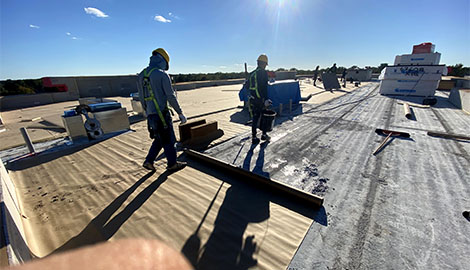
Why quotes for the same roof land so far apart
A roof is not a product with a shelf price. It is a custom job built on top of an existing structure that nobody can fully see until the work begins. Two houses of the same size and age on the same street can carry very different roofs underneath, one with a sound deck and a single shingle layer, the other with two layers to strip and rotted sheathing waiting below.
This is why a confident number delivered sight unseen should make you more cautious, not less. A roofer who prices over the phone is either padding to cover the unknowns or pricing low to win the job and making the difference back later. The roofer who insists on seeing the roof first is not being difficult. They are the only one who can give you a number that will still be true after tear-off.
The eight factors that move a roof replacement cost
Factor | Which way it moves the number |
|---|---|
Roof area | The single biggest driver. More area means more material and more labour. |
Pitch and complexity | Steep, cut-up roofs with valleys, hips, dormers, and penetrations cost more than a simple gable of the same area. Slower work, more detail, more fall-protection setup. |
Material and grade | Sets the floor. Architectural laminate is the working standard on GTA homes, with premium and metal stepping up from there. |
Number of existing layers | A roof that was shingled over rather than stripped carries more material to remove, haul, and tip. |
Decking type and condition | Rotted or delaminated sheathing has to be replaced. A spaced plank deck, common on century homes, often has to be sheeted over entirely, which is carpentry rather than roofing. |
Access and height | A tight lot, a third storey, a laneway with no driveway, or no room for a disposal bin all add time, equipment, and safety cost. |
Disposal and bin permits | Hauling and tipping the old roof costs money, and tight GTA lots may need a municipal bin placement or street-occupancy permit. |
Work bundled in while the roof is open | Attic ventilation correction, new flashing, or skylight work done during the replacement rather than as a separate job later. |
Roof area, pitch, and complexity
Area is the obvious one. Pitch and complexity are the pair homeowners underestimate.
A simple two-slope gable is fast and relatively safe to work on. A roof with multiple valleys, hips, dormers, a couple of chimneys, and a skylight is a different job entirely: slower, more cutting and detail work, and more fall-protection setup. Two roofs of identical square footage can land far apart on this factor alone, which is precisely what a per-square-foot number off a website cannot account for.
This is also why the footprint of the house is a poor guide. A steep, cut-up roof on a newer Markham or Richmond Hill subdivision home carries considerably more roof than its floor plan suggests, and it is a different job again from a simple gable of the same stated size.
Material and grade
Material sets the baseline. On GTA homes the working standard is an architectural laminate shingle, with premium and designer lines and metal stepping up from there, reflecting both the material itself and the labour to install it correctly.
This is also where a low number often hides. A smaller figure can mean a thinner, shorter-lived shingle, which is not a saving if it needs replacing years sooner. In Ontario’s freeze-thaw climate the lighter grades tend to underperform their rated life, so the shingle that looked like the better deal is frequently the one that costs more per year of service. If a quote is materially below the others, the first thing to check is which shingle line it is actually built on.
Tear-off, layers, and what is under the shingles
This is the factor most responsible for the gap between a quote and a final invoice, and the honest reason a good roofer will not commit to a firm number sight unseen.
Stripping the old roof to the deck is labour, and a roof that was shingled over rather than stripped last time carries more material to remove, haul, and tip. Roofing over an existing layer is not standard practice where a manufacturer-backed warranty is being registered, and it also hides whatever the deck underneath has been doing for the past two decades. Finding a second layer up there usually means more to strip, and it means nobody has looked at the sheathing in a very long time.
Then the deck itself is inspected, and two separate things are being assessed.
The first is condition. A dry, sound deck adds no carpentry beyond the base quote. A deck that has been quietly soaking under a failing roof, common on older GTA homes, has rotted or delaminated sheathing that has to be replaced before anything new goes on. Skipping that step does not save anything, because shingle nails driven into soft sheathing do not hold, and the work has to be done twice.
The second is the type of deck, and this is the one that catches owners of older homes completely off guard. Century homes across downtown Toronto and East York were frequently built with spaced plank sheathing, meaning boards laid with gaps between them rather than a continuous surface. Modern architectural shingles need a solid, continuous nailable deck to be installed to the manufacturer’s requirements, so a spaced plank roof often has to be sheeted over entirely in plywood or OSB before a single shingle goes on. That is a full carpentry layer across the whole roof, not a patch, and on a century home it is frequently the single largest line on the quote. It is also invisible from the ground, which is precisely why it belongs in an inspection and not in an online estimate.
This is exactly where you protect yourself. An honest quote states a fixed per-sheet rate for replacement decking before tear-off begins, so that if bad sheathing is found you already know what each sheet costs and you are not exposed to an open-ended charge once the roof is open and you have no leverage. Silence on decking does not remove the risk. It only moves the conversation to the worst possible moment, which is the morning the roof comes off.
Access, height, and safety
Where your roof is matters as much as how big it is.
A two-storey detached on an open lot with a driveway for the bin is straightforward. A century home on a narrow downtown Toronto street may have no room for a disposal bin at all, which means the old roof comes off and is carried out by hand, slower and more labour. A third storey, a laneway property with nowhere to park equipment, or a roof that can only be reached over a neighbour’s property all add time, gear, and the safety setup that a proper crew will not skip.
These realities vary house to house across the GTA and never show up in an online calculator.
Disposal and permits in Ontario
Two real line items that per-square-foot pages tend to bury.
An old roof coming off produces a large volume of material, and all of it has to be trucked and tipped at a fee. On a tight GTA lot the bin itself can need municipal placement or street-occupancy approval before it lands on the driveway or the street. Where those apply they are not optional, so a quote that has quietly omitted them is not a lower price. It is an incomplete one.
Permits are the smaller of the two but worth asking about, because requirements are administered locally and a heritage designation changes the position. Neither belongs in a quote as a vague allowance. Both should be named or explicitly excluded.
Ventilation and anything else bundled into the job
The eighth factor is the one homeowners are most likely to decline and most likely to regret declining.
Attic ventilation correction, new flashing, and skylight work all cost less as part of a replacement than as separate jobs, because the roof is already open and the crew is already on site. Ventilation in particular is not really an extra: it affects how long the new shingles last and it can affect manufacturer warranty coverage, so a quote that prices a replacement without assessing the attic has priced half the job. See how GTA freeze-thaw cycles shorten a roof’s life and how long a roof lasts in Ontario.
Why the lowest quote often costs more later
When three quotes come in and one sits well below the others, the instinct is to treat it as the deal. More often it is the warning.
A number comes in low for a reason. It might assume no decking problems and bill you for them after tear-off, when the roof is open and you have no leverage. It might use a thinner shingle, skip proper ventilation, or leave out the eave and valley protection that does the real work during an Ontario February. It might omit the disposal or the flashing. It might be a crew that moves fast, cuts the details that actually keep water out, and is gone before the first hard winter tests the work.
The honest comparison is not which number is lowest. It is which quote describes the same roof. A higher number that includes tear-off, a decking allowance, the right underlayment and ventilation, the flashing, and the disposal is frequently the better value over the life of the roof than a lower number that leaves you to discover what was missing.
How to compare roofing quotes fairly
Get them onto the same footing and read for what they include, not just what they total.
- Confirm each quote is based on an actual on-site look at the roof, not a phone estimate.
- Check that each names the material and grade specifically, not just “shingles”.
- Look for how each handles decking. Does it state what happens, and at what per-sheet rate, if rotted sheathing is found?
- Confirm each includes tear-off and disposal, the underlayment and the eave and valley protection, the flashing, and the ventilation.
- Read the workmanship warranty separately from the material warranty, because that is the part that depends entirely on the crew.
- Check the payment terms. A large share demanded before any material has arrived is a cash-flow signal worth reading, because an established roofer can secure materials on its own credit and structure payments around work actually getting done.
As a GAF Certified™ contractor, YS Roofing can register manufacturer-backed material and workmanship warranties that an uncertified installer cannot offer, which is worth confirming on any quote you are comparing.
When quotes are read this way, scope, warranty, and payment terms together, the real difference between them usually becomes obvious, and it is rarely just the price.
Frequently asked questions
How much does a new roof cost in Ontario?
There is no single honest figure, because a new roof cost in Ontario is set by the eight factors above rather than by a provincial average. Two identical-looking houses can land a long way apart once the pitch, the layer count, the deck type, and the site access are known. What you can do before anyone visits is narrow it yourself: count the storeys, look at how cut-up the roofline is from the street, and find out from the seller property information statement or a permit record how many times the roof has been done. Those three answers move the number more than the shingle brand does. The figure that will still be true after tear-off comes from an on-site measurement.
How much does it cost to replace a 2000 sq ft roof in Ontario?
Start by correcting the number itself, because 2,000 square feet of floor almost never means 2,000 square feet of roof. A steep or cut-up roof carries considerably more surface than the footprint it sits on, and that difference alone moves the material quantity before anything else is considered. From there, three things separate two otherwise identical 2,000 square foot homes: whether there is one old layer up there or two, whether the deck is continuous sheathing or spaced plank that has to be sheeted over, and whether there is room on the lot for a disposal bin. One layer, a sound plywood deck, and a driveway is the straightforward version of this job. Two layers, spaced plank sheathing that has to be sheeted over, and a hand carry-out is a substantially bigger one, and on identically sized houses that difference is a major line on the quote rather than a rounding adjustment. Which of the two you have is settled by an inspection, not by a calculator.
Why do roofing quotes for the same house vary so much?
Because they are frequently not quoting the same job. One may include full tear-off, eave and valley protection, ventilation correction, and a stated decking rate, while another prices a surface replacement and leaves the rest to be discovered. Put the scopes side by side before you compare the totals.
What is included in a roof replacement quote?
Everything in the comparison checklist above, written down rather than assumed. The two lines most often missing are the decking rate and the workmanship warranty, and those are the two that cost you if they are absent.
Does removing the old roof cost extra?
Tear-off and disposal should be inside the quote, not added afterwards. Where the cost genuinely rises is with additional layers: a roof that has been shingled over once or twice carries more material to strip, haul, and tip. That is why the number of existing layers is one of the eight factors, and why it should be identified during the inspection rather than discovered on the first morning.
Will insurance cover a 20 year old roof in Ontario?
Age works against you on two fronts. A claim has to be tied to a specific event rather than to accumulated wear, and on an older roof some policies settle on depreciated value rather than replacement value, which leaves a larger share of the number with you. Neither of those makes a claim impossible, but both are reasons to have the roof documented before a storm rather than after one. The claim process itself is covered in how to file a roof insurance claim after a GTA wind or hail storm.
Is it worth paying more for a better shingle?
On a GTA roof, usually yes, and the reason is the freeze-thaw cycling rather than the shingle itself. The lighter grades tend to underperform their rated life in this climate, so the arithmetic that matters is the price divided by the years you actually get, not the price on its own. There is a second reason. Labour, tear-off, disposal, and any decking work do not change because you chose a better shingle, so the gap between two grades on a finished quote is narrower than the gap between them on a price list.
Should I get the ventilation done at the same time?
Doing it during the replacement is the least expensive version of that work, because the roof is already open and the crew is already on site. Declining it and revisiting the attic later means paying for access twice.
Getting a real number for your roof
- Book a free roof inspection. The exterior, the flashing, the drainage, and the attic are all assessed, and the number of existing layers and the state of the deck are identified before anything is priced.
- Receive a clear, itemized written quote covering every line in the checklist above, with the per-sheet decking rate fixed before the roof is opened. No vague line items.
- Compare it line for line against any other quote and see exactly what you are paying for.
- Nothing found at tear-off becomes a bill you did not agree to. The per-sheet rate was fixed in step two, the finding is photographed, and the work is approved by you before it happens.
A figure off a website is a guess. A quote built on your roof is an answer. Book a free roof inspection, and free estimates and financing options are available once you know what the roof actually needs.
For the full decision sequence, from confirming the roof is finished through choosing a contractor, see roof replacement in the GTA: the complete homeowner guide.
Roof replacement service areas across the GTA, Durham Region, and Peterborough: Markham and residential roof replacement · Toronto · North York · Scarborough · Etobicoke · Richmond Hill · Pickering · Ajax · Whitby · Oshawa · Peterborough
YS Roofing
Trusted roofing services provider
YS Roofing is a trusted, GAF Certified™ Residential Roofing Contractor with over 15 years of industry experience serving the Greater Toronto Area. Specializing in comprehensive roof replacements, expert repairs, and structural protection, the company is built on a foundation of premium craftsmanship, high-quality materials, and exceptional customer service.